
Introduction
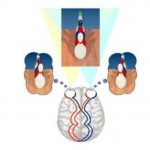
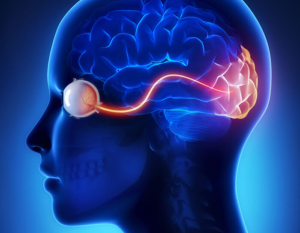
Vision is far more than simply seeing clearly at a distance, it is a dynamic, coordinated process
that depends on both eyes working seamlessly together. This cooperative function, known as
binocular vision, allows the brain to fuse input from each eye into a single, unified, three-
dimensional image. It underpins a child's ability to read, catch a ball, judge distances, and engage
confidently with the world around them.
When this system breaks down, the consequences can be profound. Binocular vision disorders
(BVDs) are among the most prevalent and underdiagnosed visual conditions in children, affecting
an estimated 5–20% of the pediatric population depending on the disorder type and diagnostic
criteria used. Despite their high prevalence, these disorders frequently go undetected by standard
school vision screenings, which typically assess only distance visual acuity and miss the functional
near-vision and eye-teaming deficits that define most BVDs.
The good news for parents and caregivers is that when detected early, binocular vision disorders
respond remarkably well to treatment. This blog post will help you understand what binocular
vision disorders are, how they present in children, how they are diagnosed by a pediatric
optometrist, and what evidence-based treatment options are available.
What Are Binocular Vision Disorders?
Binocular vision disorders are a group of conditions in which the two eyes fail to work together
efficiently as a coordinated team. Rather than a problem with the health of the eyes themselves or
with simple refractive error (nearsightedness, farsightedness, or astigmatism), BVDs reflect a
dysfunction in the neuromuscular system that controls eye alignment, focusing, and movement.
The major categories include:
Convergence Insufficiency (CI)
Convergence insufficiency is the most common binocular vision disorder in children, affecting
approximately 4–6% of school-aged children. It occurs when the eyes struggle to turn inward
(converge) adequately to maintain comfortable single vision during close tasks such as reading or
screen use. Children with CI frequently report eyestrain, headaches after sustained near work,
words that blur or "jump" on the page, and difficulty sustaining concentration. The Convergence
Insufficiency Treatment Trial (CITT) — a landmark randomized clinical trial — confirmed CI as a
clinically significant condition with measurable impact on reading and quality of life.
Convergence Excess (CE)
In convergence excess, the eyes over-converge, turning inward more than required, particularly
during near tasks. This creates excessive accommodative demand and can lead to eye fatigue,
headaches, and occasionally double vision at near. It is often associated with a high
accommodative convergence-to-accommodation (AC/A) ratio.
Divergence Insufficiency (DI)
Divergence insufficiency is a less common disorder characterized by difficulty maintaining
comfortable eye alignment at distance, with the eyes tending to drift inward (esophoria) when
viewing far targets. It can present with intermittent double vision or discomfort during activities
such as watching television or driving.
Divergence Excess (DE)
Conversely, divergence excess involves an outward drift of one or both eyes (exophoria or
intermittent exotropia) that is more pronounced at distance than at near. Children may squint or
close one eye in bright light to avoid the discomfort of double images.
Accommodative Dysfunction
Accommodation refers to the eye's ability to dynamically shift focus between near and far
distances. Accommodative insufficiency, where a child cannot sustain adequate focus at near, is a
common but often overlooked cause of reading difficulties. Accommodative infacility, in which the
focusing system is slow or inaccurate, and accommodative excess (a tendency to over-focus) are
also clinically important variants. These disorders often co-occur with convergence problems, as
the accommodative and vergence systems are neurologically coupled.
Amblyopia and Strabismus
While not strictly convergence or accommodative disorders, amblyopia (reduced vision in one eye
due to abnormal visual experience during development) and strabismus (visible eye misalignment)
are intimately related to binocular vision. Both conditions disrupt or prevent normal binocular
development and may severely impact stereoscopic depth perception.
Symptoms of Binocular Vision Disorders in Children
One of the greatest challenges with BVDs is that children rarely volunteer symptoms clearly —
they often assume that what they experience is simply how everyone sees. As a parent or
caregiver, being alert to behavioral cues is critically important.
Common symptoms and signs to watch for include:
Eyestrain or eye fatigue, particularly after reading, using screens, or doing homework
Headaches — especially frontal or around the eyes — occurring during or after near tasks
Double vision (diplopia), which a child may describe as "two of everything" or may dismiss
as occurring only sometimes
Blurred vision that fluctuates during sustained reading or close work
Difficulty concentrating and frequent loss of place when reading, sometimes attributed to
"attention problems"
Skipping or re-reading lines of text; using a finger to track along the page
Avoidance of reading and near tasks, showing preference for activities that do not
require sustained close focus
Closing or covering one eye when reading or watching television — a significant red flag
Clumsiness or poor depth perception, such as difficulty catching balls, misjudging steps,
or bumping into objects
Tilting or turning the head when looking at objects
Sensitivity to light in some cases
Difficulty with tasks requiring precise hand-eye coordination, including handwriting
and sports
It is important to note that symptoms can be highly variable. A child with convergence insufficiency
may sail through an eye chart test with 20/20 vision and show no obvious behavioral signs in a
structured classroom, yet struggle profoundly during extended homework sessions. Some children
adapt by simply avoiding close work, leading parents and teachers to interpret their behavior as
laziness or disinterest rather than a vision problem. Symptoms also tend to worsen with fatigue,
illness, and increased academic demands.
Diagnosis of Binocular Vision Disorders
Standard school vision screenings and even basic optometric exams focusing solely on visual
acuity and refractive error are insufficient to detect most binocular vision disorders. A
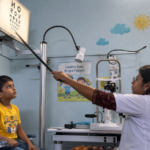
comprehensive pediatric binocular vision evaluation is required, encompassing a battery of
specialized tests.
Comprehensive Eye Examination
The evaluation begins with a thorough case history — the optometrist will ask detailed questions
about the child's symptoms, reading habits, academic performance, and any family history of eye
conditions. Visual acuity testing at both distance and near is performed, followed by assessment of
refractive error (requiring correction of any significant nearsightedness, farsightedness, or
astigmatism that may be contributing to the problem).
Assessment of Vergence (Eye Teaming)
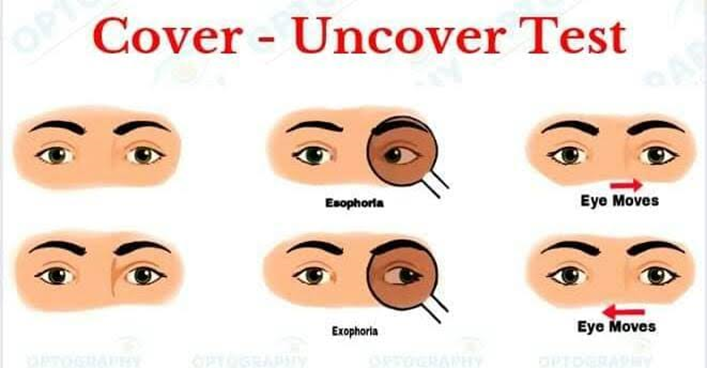
Cover Test and Alternate Cover Test: These fundamental tests reveal the presence and
magnitude of any eye misalignment (strabismus or phoria). The cover test assesses
whether one eye deviates when the other is covered, while the alternate cover test
quantifies the total deviation.
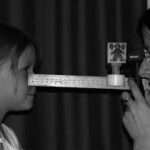
Near Point of Convergence (NPC): A small target is slowly moved toward the child's nose
while the examiner observes the point at which one eye breaks away and drifts outward. A
receded NPC typically defined as greater than 6–10 cm is a hallmark finding in
convergence insufficiency.
Vergence Ranges: Using prism bars or a phoropter, the clinician measures the range over
which the child can maintain comfortable single binocular vision while converging (positive
fusional vergence) and diverging (negative fusional vergence). Reduced positive fusional
vergence amplitude is a defining feature of CI.
Maddox Rod and von Graefe Technique: These tests measure phorias (latent deviations)
at distance and near under dissociated conditions, revealing the magnitude of convergence
or divergence dysfunction.
Assessment of Accommodation (Focusing)
Monocular Estimated Method (MEM) Retinoscopy: This dynamic retinoscopy technique
objectively estimates the accommodative response relative to a near target, identifying
over- or under-accommodation.
Accommodative Amplitude (Donders' Push-Up Method): This test measures the
maximum focusing power available to the child by pushing a small print target toward the
eye until it first blurs — a reduced amplitude indicates accommodative insufficiency.
Accommodative Facility: Using ±2.00 diopter flipper lenses, the clinician assesses how
quickly and accurately the child can shift focus. Normal facility rates for school-aged
children are approximately 11–13 cycles per minute monocularly.
Assessment of Stereopsis and Binocularity
Stereoacuity Testing: Tests such as the Randot, Stereo Fly, and TNO (Thudichum-Nobile-
Osterberg) assess the finest level of depth perception the child can detect. Reduced or
absent stereoacuity is a sensitive indicator of binocular dysfunction and amblyopia.
Worth 4-Dot Test: This test determines whether the child is using both eyes simultaneously
(binocular fusion), suppressing one eye, or experiencing diplopia.
Sensory Fusion Tests: Additional tests using polarized or red-green targets evaluate the
quality of binocular fusion and the presence of suppression.
Assessment of Ocular Motility
Smooth pursuits (tracking a moving target), saccades (quick eye movements between targets),
and fixation stability are evaluated, both clinically and with validated tools such as the
Developmental Eye Movement (DEM) Test, which assesses saccadic control during reading-like
tasks.
Additional Investigations
In some cases, computerized vision therapy assessment tools or video-based eye tracking
systems may be used to objectively quantify vergence and accommodative responses, providing
baseline measurements against which treatment progress can be tracked.
Treatment Options for Binocular Vision Disorders
The management of BVDs is individualized, evidence-based, and typically combines more than
one therapeutic modality. Treatment is selected based on the specific type and severity of the
disorder, the child's age, and the degree of symptom burden.
Vision Therapy
Vision therapy (VT) is a structured, individualized program of office-based and home-based
visual activities designed to improve the efficiency and accuracy of the visual system including eye
teaming, focusing, eye movements, and visual processing. It is the primary and most extensively
evidence-supported treatment for most binocular vision disorders in children.
The Convergence Insufficiency Treatment Trial (CITT), a rigorously designed, multicenter,
randomized clinical trial funded by the National Eye Institute — conclusively demonstrated that
office-based vision therapy with home reinforcement is significantly more effective than home-
based pencil push-ups, home-based computer therapy, or placebo office therapy for the treatment
of symptomatic convergence insufficiency in children aged 9–17 years. Follow-up studies
confirmed that these gains were largely maintained one year after the cessation of treatment.
Common Vision Therapy Exercises and Techniques
For Convergence Insufficiency:
Brock String: A string with colored beads placed at different distances helps the child
develop awareness of convergence and practice accurate eye aiming. When focused on a
given bead, the child should perceive the string forming an "X" at that point — any deviation
signals binocular dysfunction.
Barrel Card / Lifesaver Cards: Convergence stimulation cards that train the patient to
converge and maintain fusion at progressively closer distances.
Computer-based vergence therapy (e.g., HTS — Home Therapy System): Software that
uses accommodative targets and real-time feedback to train vergence responses, most
effective when used as a home supplement to office-based therapy.
Base-Out Prism Training: Progressive prism exposure to expand the range of positive
fusional vergence.
For Accommodative Dysfunction:
Hart Chart Accommodative Rock: The child alternates focus between a small near chart
and a large distance chart with plus and minus lenses, training the speed and flexibility of
accommodative responses.
Minus Lens Flipper Training: Monocular and binocular lens flipper exercises improve the
speed and accuracy of accommodative changes.
Push-Up / Push-Away Exercises: Stimulate or relax accommodation at varying distances to
build amplitude and stamina.
For Saccadic and Pursuit Dysfunction:
Saccadic Training with Saccade Charts: Structured exercises training fast, accurate eye
movements between letter or number targets, supporting reading efficiency.
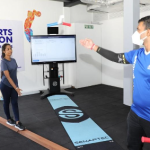
Wayne Saccadic Fixator: An electronic board with randomly illuminating lights that the child
must extinguish by touching them, training rapid eye-hand coordination and saccadic
accuracy.
For Suppression:
Vectograms and Tranaglyph Targets: Anti-suppression activities using polarized lenses to
train simultaneous use of both eyes.
Red-Green Anaglyphic Activities: Activities using red-green filter glasses to make
suppression immediately apparent and train binocular use.
A typical office-based vision therapy program for CI consists of 12–24 weekly sessions of 45–60
minutes each, supplemented by 15–20 minutes of daily home activities. Progress is reassessed at
regular intervals using the same diagnostic measures obtained at baseline.
Prism Lenses
Prism lenses bend light in a specific direction, effectively shifting the position of images to
compensate for an eye's tendency to drift. By reducing the demand placed on the vergence
system, they can relieve symptoms of diplopia and eye strain.
Base-In prisms reduce the demand for convergence and are used in convergence excess
(to relax over-converging eyes) and sometimes in symptomatic exophoria at near.
Base-Out prisms assist convergence and may be used in divergence insufficiency or in
cases where convergence insufficiency cannot be fully corrected with vision therapy alone.
Prisms are most commonly prescribed in spectacle lenses. Fresnel press-on prisms may be used
as temporary, adjustable measures while the child undergoes therapy or awaits surgical
evaluation. Importantly, while prisms alleviate symptoms, they do not correct the underlying
vergence dysfunction and are therefore most effective as adjuncts to vision therapy rather than
standalone treatments for children.
Corrective Lenses
Refractive error plays an important and sometimes underappreciated role in binocular vision
disorders. Because the accommodation and vergence systems are neurologically linked,
uncorrected refractive error can directly drive binocular imbalances.
Hyperopia (Farsightedness) requires extra accommodative effort to see clearly at any
distance, which in turn drives excess convergence via the accommodative-convergence
reflex — a primary mechanism in accommodative esotropia and convergence excess.
Full cycloplegic correction of significant hyperopia with spectacles often dramatically
reduces or resolves these forms of esotropia.
Myopia (Nearsightedness), particularly when uncorrected, can worsen near-vision
exophoria by reducing the stimulus to converge.
Anisometropia (unequal refractive error between eyes) disrupts binocular fusion and is
one of the leading risk factors for amblyopia. Correcting anisometropia is typically the first
step in amblyopia treatment.
Bifocal or progressive addition lenses may be prescribed for children with convergence
excess and high AC/A ratios, as they reduce the near accommodative demand and
consequently the associated over-convergence.
A cycloplegic refraction performed using dilating eye drops to relax accommodation and reveal the
full refractive error and is an essential component of any comprehensive pediatric binocular vision
evaluation.
Surgery
Strabismus surgery is reserved for specific presentations of ocular misalignment, most commonly
large-angle, constant, or cosmetically significant strabismus where the deviation is too large to be
managed with prisms or vision therapy alone. Surgery adjusts the tension of one or more of the
extraocular muscles attached to the eye, physically realigning the eyes.
It is important to understand that surgery corrects the cosmetic alignment of the eyes but does not
by itself establish or restore binocular vision. Post-operative vision therapy is frequently necessary
to reinforce binocular fusion, suppress amblyopia, and develop stereoacuity following surgical
realignment. Surgery is neither appropriate nor indicated for the functional BVDs (CI,
accommodative dysfunction, vergence insufficiency) that are most prevalent in the pediatric
population; for these conditions, vision therapy is the evidence-based treatment of choice.
Conclusion
Binocular vision disorders are common, consequential, and eminently treatable, yet they remain
significantly underdiagnosed in children. The cascade of academic, social, and emotional
difficulties they can cause is preventable when parents, educators, pediatricians, and eye care
professionals work together to ensure children receive timely, comprehensive vision evaluations
that go beyond simple visual acuity testing.
As a parent or caregiver, the most important steps you can take are: familiarize yourself with the
symptoms described in this article, take those symptoms seriously even when your child passes a
standard eye screening, and seek evaluation from a pediatric optometrist trained in binocular
vision assessment and vision therapy if you have concerns.
If your child is struggling with reading, complaining of headaches after homework, squinting or
covering one eye, avoiding near tasks, or being flagged for attention difficulties at school — a
comprehensive binocular vision evaluation is a logical and potentially life-changing next step. The
evidence is clear: with the right diagnosis and appropriate, individualized treatment, the vast
majority of children with binocular vision disorders can develop fully efficient, comfortable, and
rewarding visual function.
Don't wait for the problem to resolve on its own — schedule a comprehensive eye
examination with a pediatric optometrist today