Most people assume that vision problems start in the eyes. If someone can't see well, we think of
cataracts, nearsightedness, or damage to the retina. But there is a less understood condition that flips
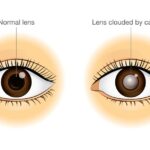
that assumption on its head: Cortical Visual Impairment, or CVI. In CVI, the eyes are perfectly healthy.
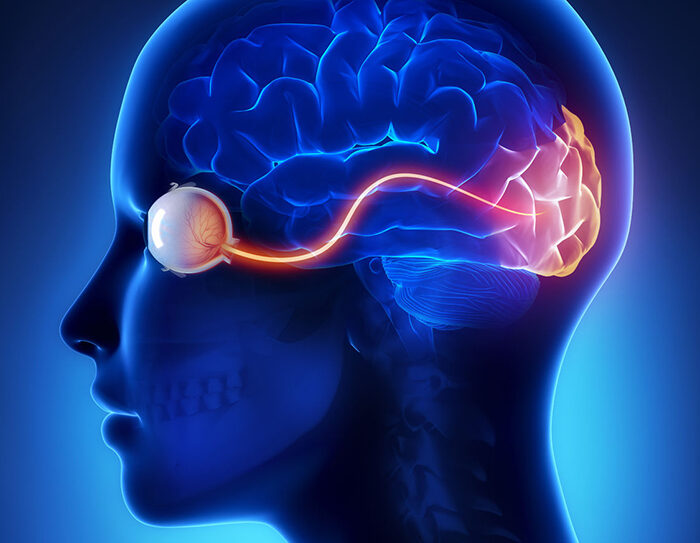
They can detect light, move properly, and focus on objects. The problem lies in the brain. Specifically,
the parts of the brain responsible for interpreting visual information, the visual cortex and its connecting
pathways are damaged or underdeveloped. So the eyes send signals, but the brain cannot make sense
of them. This makes CVI fundamentally different from any eye disease. It is a disorder of "processing",
not of "capture".
CVI is now the leading cause of permanent visual impairment in children in developed countries. As
medical advances help more premature infants and babies with neurological conditions survive, the
number of children diagnosed with CVI has grown dramatically. Yet many parents, teachers, and even
eye doctors still know very little about it. This lack of awareness leads to misdiagnosis, frustration, and
missed opportunities for intervention. Understanding CVI requires shifting our thinking from "what can
the child see?" to "how does the child's brain process what the eyes see?"
What Causes CVI?
Damage to the visual pathways in the brain can happen at any time: before birth, during delivery, or
after birth. Common causes include oxygen deprivation (hypoxic-ischemic encephalopathy), infections
like meningitis or encephalitis, head trauma, seizures, or genetic conditions that affect brain
development. In premature infants, the fragile blood vessels in the developing brain can bleed, leading
to periventricular leukomalacia, which often damages the optic radiations, the wiring that connects the
thalamus to the visual cortex. Even a brief lack of oxygen during a complicated birth can leave lasting
effects on the brain's ability to process sight. The severity varies widely: some children have mild
difficulties, like trouble recognizing faces in a crowd, while others are completely blind from a
neurological standpoint.
Because the eyes themselves are normal, a standard eye exam will not detect CVI. The doctor may note
that the child can fixate on a light or track a moving object briefly. But that does not mean the child has
functional vision. The hallmark of CVI is an inconsistent, fluctuating visual ability, the child might see a
red ball one moment but not the next, depending on factors like fatigue, lighting, or sound. This
unpredictability can baffle parents and clinicians alike.
The Unique Symptoms of CVI
CVI has a distinctive set of behaviors that set it apart from ocular blindness. Children with CVI often
prefer to look at familiar objects, especially ones that are brightly colored, reflective, or moving. They
may stare at ceiling fans, spinning wheels, or shiny floors. This is not a random fascination; their brains
can process high-contrast movement more easily than static, detailed scenes. They also tend to see
better with one object at a time. A single red toy on a plain black background might be seen clearly, but
the same toy placed among other toys on a cluttered rug becomes invisible. The brain gets
overwhelmed by too much visual input.
Another classic sign is difficulty with distance vision. A child might recognize a parent's face up close but
fail to see the same face from across the room. Depth perception is often impaired, making stairs or
uneven surfaces dangerous. Some children have a visual field preference, they may see only to the left
or right, or only in the lower part of their field. Others have color preferences or see better when objects
are in motion. Light sensitivity is common too: some children shut their eyes or turn away from bright
lights, while others are drawn to them.
Most importantly, CVI affects how a child uses vision in daily life. They may bump into furniture, reach
for things inaccurately, or fail to notice obstacles. But given the right environment, reduced clutter, good
lighting, high contrast, familiarity, their performance can improve dramatically. This variability is the key
to understanding CVI.
Diagnosis and the Role of a Team
Diagnosing CVI requires more than an eye chart. An ophthalmologist can rule out eye disease, but the
definitive diagnosis comes from a careful history and observation by specialists who understand brain-
based vision. Typically, a developmental optometrist, a neurologist, or a vision rehabilitation therapist
will assess the child's visual behaviors against a set of characteristic features. There is no single brain
scan that confirms CVI, though an MRI may show damage to the visual pathways or occipital lobe.
Because CVI is often missed, many children are labeled as "blind" with no hope for improvement, or
worse, misdiagnosed with autism or intellectual disability because of their unusual visual responses. In
reality, CVI can improve significantly with the right interventions. The brain is plastic, especially in young
children, and with consistent stimulation designed around the child's visual needs, neural connections
can be strengthened or rerouted.
Strategies That Help
Helping a child with CVI is not about training the eyes but about training the brain and adjusting the
environment. The most widely used approach comes from Dr. Christine Roman-Lantzy, who developed a
framework based on recognizing the child's "visual complexity threshold." For example, if a child can
only see one object at a time, you present that object against a simple black or white background. You
introduce movement to grab their attention, then slowly reduce the movement to help them learn to
fixate. You use familiar, meaningful objects, like a favorite cup or a parent's face rather than abstract
toys.
Lighting matters enormously. Some children need dim lights; others need a small flashlight directed at
the object. Color is also a tool: children with CVI often see red and yellow best. Placing a red sticker on a
white cup can make the cup visible where it wasn't before. Patience is critical. The child may look at an
object for only a few seconds, but that brief gaze is a victory; it means the brain registered the image.
Over time, those seconds can stretch into minutes of sustained visual attention.
Parents can be trained to create "visual homes" where clutter is minimized, walls are neutral, and
favorite items are placed in the child's best visual field. Simple changes like using a black placemat under
a white plate at mealtime—can transform a frustrating experience into a successful one.
A Hopeful Outlook
CVI is not a static condition. Unlike damage to the eye itself, brain-based visual impairment can improve
with neuroplasticity, especially when intervention starts early. Many children who are initially thought
to be profoundly blind go on to read print, navigate independently, and participate fully in school and
life. The key is to stop expecting them to see like typical children and instead learn their unique visual
language. When we understand that a child's brain is trying its best with limited wiring, we can design a
world that makes seeing possible. In that sense, CVI is not just a medical diagnosis, it is a call for
creativity, patience, and a deeper appreciation of how the brain truly "sees."