Myopia, commonly known as nearsightedness, is becoming increasingly common among
children and teenagers worldwide. Excessive screen exposure, reduced outdoor activities, and
genetic factors have contributed to the rapid rise in myopia cases. More importantly,
progressive myopia can increase the risk of serious eye conditions later in life, including
retinal detachment, glaucoma, cataract, and myopic macular degeneration.
To slow the progression of myopia, eye care professionals commonly recommend two
evidence-based treatments: Orthokeratology (Ortho-K) and Atropine Therapy. Both methods
are widely used in modern myopia management, yet they work in completely different ways.
Parents and patients often become confused when deciding which option is more suitable.
This article explores Orthokeratology and Atropine Therapy in detail, including their
mechanism, benefits, limitations, effectiveness, and factors to consider before choosing a
treatment plan.
Understanding Myopia Progression
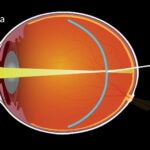
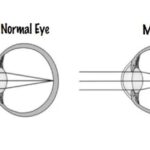
Myopia occurs when the eyeball grows longer than normal or when the cornea becomes too
curved. As a result, light focuses in front of the retina instead of directly on it, causing distant
objects to appear blurry.
Children with progressive myopia may require frequent spectacle changes every year. If not
properly managed, high myopia can lead to long-term ocular complications. Therefore,
controlling the progression of myopia during childhood is extremely important.
Modern myopia control strategies focus on slowing axial elongation of the eye rather than
simply correcting vision.
What is Orthokeratology?
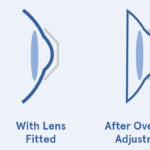
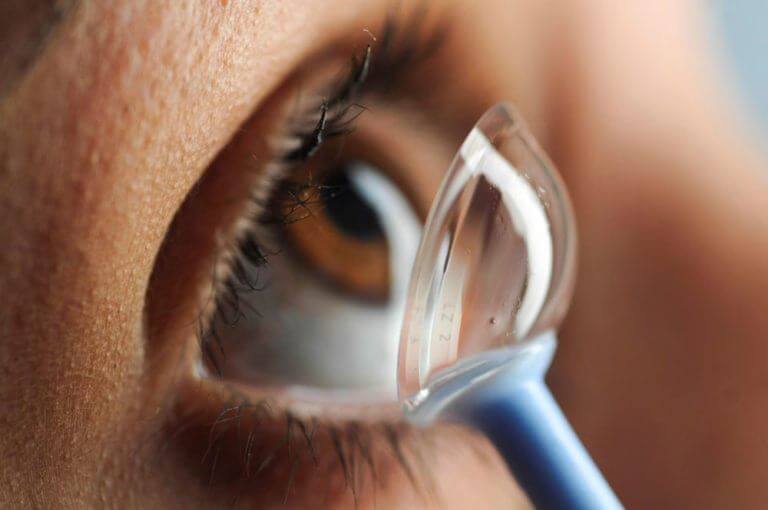
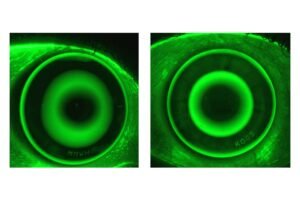
Orthokeratology, commonly called Ortho-K, is a non-surgical vision correction method that
uses specially designed rigid gas permeable contact lenses worn overnight. These lenses
temporarily reshape the cornea while the patient sleeps.
In the morning, the lenses are removed, allowing the child to enjoy clear vision throughout
the day without glasses or daytime contact lenses.
Ortho-K lenses are customized according to the patient’s corneal curvature and refractive
error.
How Does Ortho-K Control Myopia?
Apart from correcting vision, Ortho-K creates peripheral myopic defocus on the retina. This
optical effect helps slow down axial eye growth, which is the primary reason for progressive
myopia.
Several clinical studies have shown that Orthokeratology can significantly reduce myopia
progression in children compared to regular spectacles.
Advantages of Orthokeratology
1. Daytime Freedom from Glasses
Children can participate in sports, outdoor activities, and school functions without depending
on spectacles.
2. Effective Myopia Control
Research suggests that Ortho-K can slow axial elongation effectively, especially in children
with rapidly progressing myopia.
3. Improved Quality of Life
Many children feel more confident and active without wearing glasses during the day.
4. Suitable for Active Children
Athletes and children involved in swimming or outdoor sports often benefit greatly from
Ortho-K.
Limitations of Orthokeratology
1. Risk of Infection
Since lenses are worn overnight, poor hygiene can increase the risk of microbial keratitis or
corneal infection.
2. Requires Proper Maintenance
Parents and children must strictly follow lens cleaning and replacement instructions.
3. Higher Initial Cost
Ortho-K lenses and follow-up visits may be more expensive than traditional spectacles or
atropine drops.
4. Temporary Effect
If lens wear is discontinued, the cornea gradually returns to its original shape.
What is Atropine Therapy?
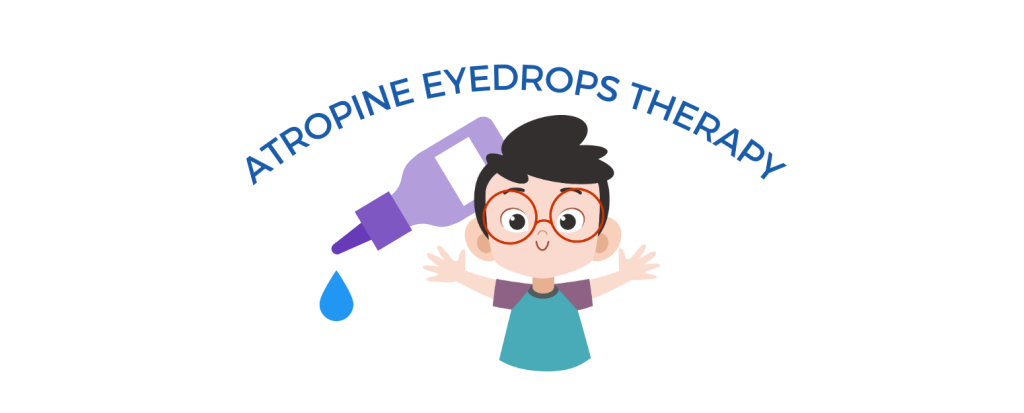
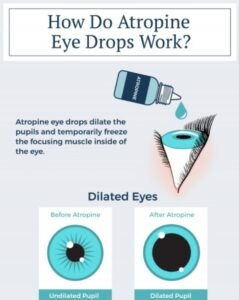
Atropine Therapy involves the use of low-dose atropine eye drops to slow myopia
progression in children. It is currently one of the most researched and widely accepted
pharmacological methods for myopia control.
Low concentrations such as 0.01%, 0.025%, or 0.05% atropine are commonly prescribed
depending on the child’s condition and progression rate.
The drops are usually instilled once daily at night.
How Does Atropine Work?
Although the exact mechanism is not fully understood, atropine is believed to reduce
excessive eye growth by acting on biochemical pathways within the sclera and retina.
Unlike spectacles, atropine does not directly correct blurred vision. Children generally still
need glasses or contact lenses for clear vision while using the drops.
Advantages of Atropine Therapy
1. Easy to Use
Applying eye drops once daily is simple and convenient for most families.
2. Non-Invasive Treatment
No contact lenses or corneal reshaping procedures are involved.
3. Effective in Slowing Myopia
Studies have demonstrated significant reduction in myopia progression with low-dose
atropine.
4. Lower Risk of Corneal Complications
Since no lenses are worn overnight, the risk of corneal infection is much lower compared to
Ortho-K.
5. More Affordable
In many cases, atropine therapy is less expensive than Orthokeratology.
Limitations of Atropine Therapy
1. Does Not Eliminate Glasses
Children still require spectacles or contact lenses for visual correction.
2. Possible Side Effects
Some children may experience mild photophobia, glare, or difficulty focusing at near
distances.
3. Long-Term Compliance Needed
Daily use over several years may be required for optimal results.
4. Rebound Effect
Stopping atropine suddenly can sometimes lead to faster myopia progression, especially with
higher concentrations.
Comparing Orthokeratology and Atropine Therapy
Feature Orthokeratology Atropine Therapy
Method Overnight contact lenses Eye drops
Vision Correction Yes No
Myopia Control Effective Effective
Need for Glasses Usually not during
daytime Yes
Risk of Infection Moderate Very low
Maintenance High Low
Cost Higher Lower
Convenience Requires lens care Simple daily drops
Suitable for
Sports Excellent Depends on
spectacles
Which Treatment is More Effective?
Both Orthokeratology and Atropine Therapy are scientifically proven methods for controlling
myopia progression. However, effectiveness may vary depending on the child’s age, lifestyle,
progression rate, and ocular condition.
Some studies suggest that higher concentrations of atropine may provide stronger myopia
control, while Ortho-K may be particularly effective in reducing axial elongation.
In recent years, combination therapy using Ortho-K along with low-dose atropine has also
shown promising results for rapidly progressing myopia.
Factors to Consider Before Choosing Treatment
Age of the Child
Younger children with rapidly progressing myopia may require aggressive myopia
management.
Lifestyle and Activities
Children involved in sports or outdoor activities may prefer Ortho-K for daytime freedom.
Hygiene and Responsibility
Ortho-K requires excellent hygiene practices and regular follow-up appointments.
Budget
Atropine therapy is often more affordable compared to customized Ortho-K lenses.
Refractive Error
Not all prescriptions are suitable for Orthokeratology. Eye examination and corneal
evaluation are essential.
Parent and Child Preference
Treatment success largely depends on compliance and comfort with the chosen method.
Importance of Regular Eye Examinations
Regardless of the treatment method selected, regular eye examinations are essential.
Monitoring axial length, refractive error progression, corneal health, and visual performance
helps ensure treatment safety and effectiveness.
Eye care professionals may adjust treatment plans depending on progression patterns and
individual response.
Conclusion
Orthokeratology and Atropine Therapy are both valuable tools in modern myopia
management. Ortho-K offers the advantage of clear daytime vision without glasses, making it
highly attractive for active children. On the other hand, atropine therapy provides a simple,
affordable, and effective option with minimal maintenance.
There is no universal “best” treatment for every child. The ideal choice depends on individual
lifestyle, myopia progression rate, ocular health, compliance, and professional evaluation.
Early detection and timely myopia control can significantly reduce the risk of future eye
complications. Therefore, parents should consult qualified eye care professionals to
determine the most appropriate treatment strategy for their child.
With proper monitoring and management, progressive myopia can be effectively controlled,
helping children maintain healthier vision for the future.