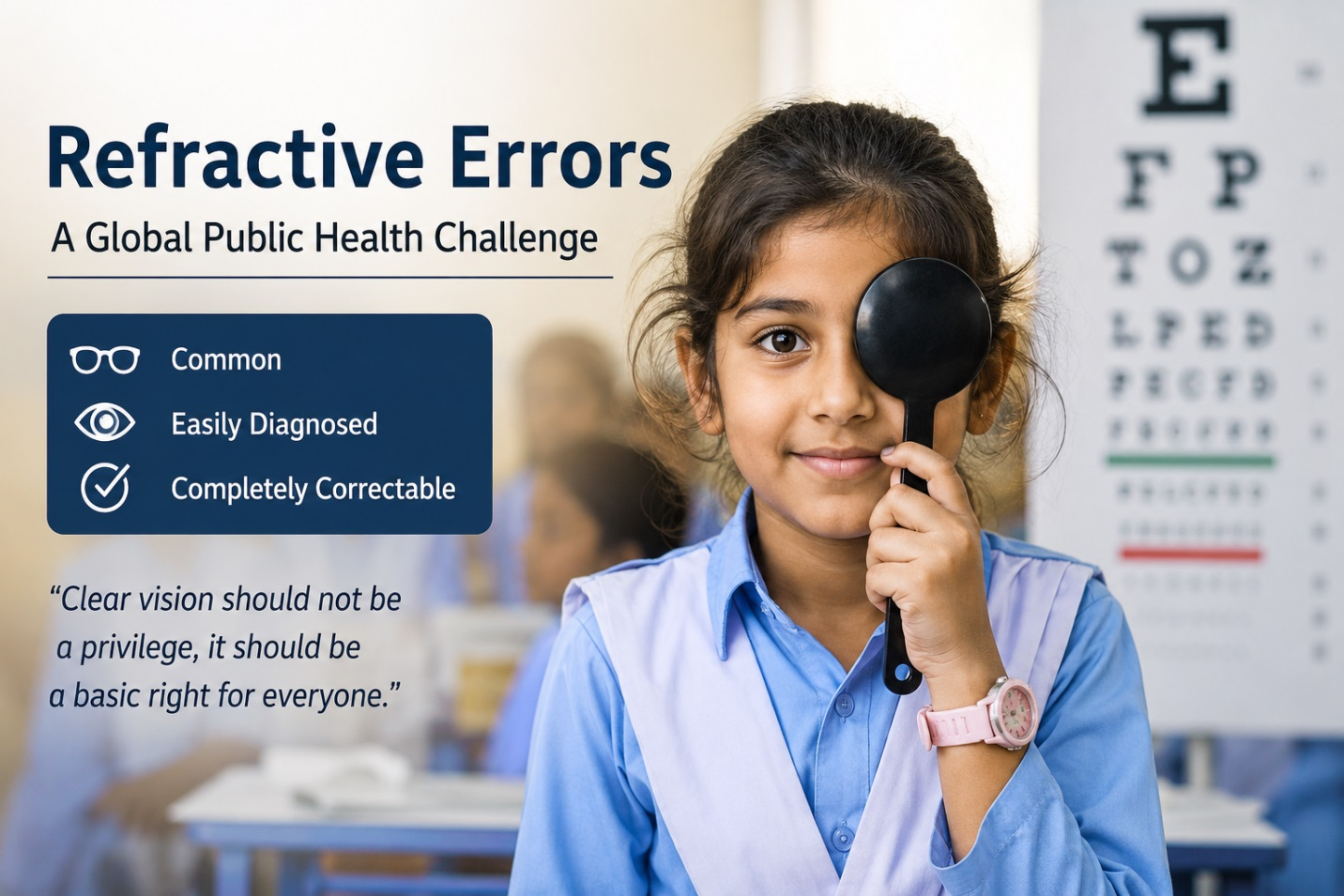
Refractive errors remain among the most prevalent yet largely overlooked causes of visual
impairment worldwide. This group—including myopia, hyperopia and astigmatism—is easily
diagnosed within minutes and effectively corrected with a simple pair of spectacles.
Despite this simplicity, millions in developing countries continue to experience avoidable vision
loss, making refractive error a significant but silent public health inequality.
A Global Issue with Unequal Consequences
Refractive errors affect individuals across all age groups, with consequences observed in
everyday life: children struggling in classrooms, adults facing reduced work efficiency and older
individuals losing independence in routine activities.
What distinguishes this condition is its paradox: it is highly common, easily detected and fully
correctable—yet persistently under-treated in low- and middle-income settings.
Disproportionate Burden in Developing Regions
The impact is significantly greater in developing countries due to persistent structural barriers
in eye care delivery. Limited availability of services, particularly in rural areas, restricts timely
diagnosis and treatment. In addition, low awareness means many individuals do not associate
blurred vision with a treatable condition. Financial constraints further contribute, as even low-
cost spectacles may be inaccessible or deprioritized.
Together, these factors result in a large population living with avoidable visual disability.
Impact on Children and Education
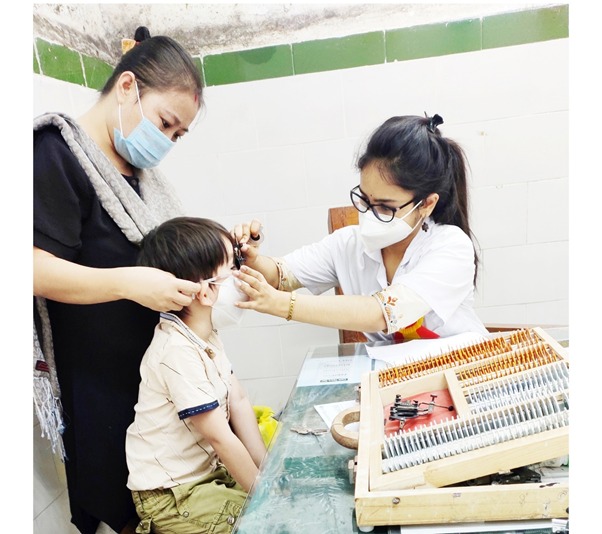
School-aged children are among the most affected groups. Uncorrected refractive errors in this
population often lead to difficulty viewing classroom material, reduced academic performance,
impaired concentration and delayed detection of vision problems.
At the same time, the prevalence of myopia is increasing rapidly in children, particularly in
urban environments. Greater exposure to digital screens, combined with intensive near-work
demands and reduced outdoor activity, is contributing to this rising trend. Without early
intervention, these visual challenges can translate into long-term educational disadvantage.
Drivers of Increasing Prevalence
Several lifestyle and environmental shifts are contributing to the growing burden of refractive
errors. These include increased use of digital devices, reduced time spent outdoors, higher
academic pressures involving sustained near work and broader urbanization patterns that
influence daily visual behavior.
Broader Social and Economic Impact
The consequences of uncorrected refractive errors extend beyond vision. Educational
attainment may be compromised, workforce productivity reduced and overall quality of life
diminished. Individuals often adapt to impaired vision without realizing that a simple corrective
intervention could significantly improve daily functioning.
Priority Areas for Action
Reducing the burden requires coordinated efforts, including expansion of school screening
programs, strengthening rural eye care services, improving affordability and distribution of
spectacles, increasing public awareness and embedding vision care within primary healthcare
frameworks. Even modest interventions at scale can produce substantial improvements in
population eye health.
Key Takeaway
Refractive errors continue to be a leading cause of avoidable visual impairment in developing
countries not because treatment is complex, but because access and awareness remain
insufficient. The solution is straightforward and already available. What is required is effective
implementation.
Clear vision is fundamental to education, productivity and quality of life—and ensuring it should
not be a privilege, but a basic standard of care.