
Evolution of low vision management over the decades
The need for Low vision Rehab for Blind patients: Advantages and Prospects. According to the World Health Organization (W.H.O), Low vision is defined as visual acuity of 3/60 to less…
Types of non- optical devices Relative size and larger assistive devices Glare, contrast, and lighting control device Posture and comfort maintenance device Handwriting and written communication devices Medical management devices…
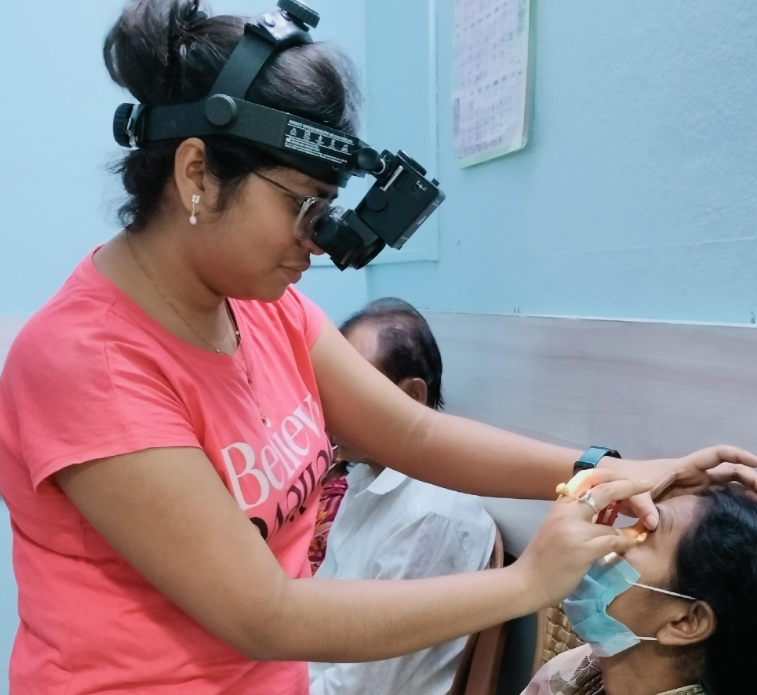
The retinoscope consists of a light, a condensing lens that concentrates the light, and a mirror. During the procedure, our doctors use the retinoscope to shine light through the pupil, then…
LOW VISION: Low Vision is the term used to describe a significant visual impairment that it cannot be fully corrected with glasses, contact lenses, medication or eye surgery. Depending on…
As technology improve the material and designs of CL wear as benefit from greater flexibility and more choices. Extended wear contacts are, most typically, contact lenses that can be worn…
Vision rehabilitation (often called vision rehab) is a term for a medical rehabilitation to improve vision or low vision. In other words, it is the process of restoring functional ability…
Astigmatism is a type of refractive error where in the refraction varies in different meridian. Consequently ,the rays of light entering the eye cannot converge to a point focus but…
DEFINITION OF LOW VISION (WHO- World Health Organization): A person with low vision is one who has impairment of visual functioning even after treatment of an operation and standard refractive…
Introduction - A spasm of accommodation (also known as a ciliary spasm, an accommodation, or accommodative spasm) is a condition in which the ciliary muscle of the eye remains in…
Retinoscopy is also known as skiascopy, shadow test or pupilloscopy or koreoscopy. It was introduced by Bowman in 1859. It is an objective method of finding out the error of…