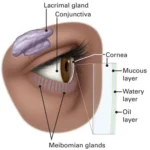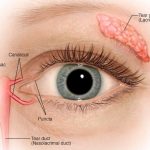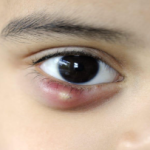
Hormonal balance is essential for maintaining normal physiological function, and its influence extends significantly to the visual system. The eye contains receptors for estrogen, progesterone, and androgens in structures such as the cornea, lens, retina, lacrimal gland, and meibomian glands. As a result, hormonal fluctuations—whether physiological (life-stage related) or pathological (endocrine disorders)—can produce measurable effects on vision. These effects are often under-recognized in
clinical practice but are crucial for accurate diagnosis and patient management
A. How Hormones Affect Vision: Detailed Mechanisms and Clinical Impact:
Hormonal changes impact vision through multiple pathways. These effects may be temporary or long- term, depending on the underlying cause.
1. Tear Film Instability and Ocular Surface Dysfunction :-
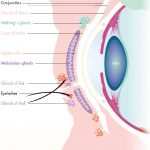
Hormones, particularly androgens and estrogen, regulate the function of the lacrimal and meibomian glands.
• Hormonal imbalance reduces lipid secretion from meibomian glands
• Increased tear evaporation leads to tear film instability
Impact on Vision:
• Fluctuating or intermittent blurred vision
• Reduced clarity during prolonged reading or screen use
• Increased visual fatigue and eye strain
• Decreased contrast sensitivity
This is one of the most common complaints, especially in postmenopausal women and aging males with reduced testosterone levels.
2. Corneal Changes and Refractive Variations :-
Hormones influence corneal hydration, thickness, and curvature.
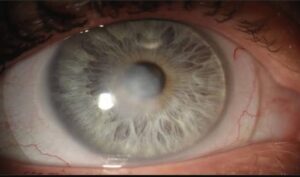
• Elevated estrogen levels (e.g., during pregnancy) can cause corneal edema
• Changes in corneal biomechanics may alter refractive status
Impact on Vision:
• Temporary myopic or hyperopic shifts
• Unstable vision (frequent changes in clarity)
• Difficulty in achieving accurate spectacle prescription
• Reduced contact lens tolerance due to altered corneal sensitivity
These changes are typically reversible but clinically significant during active hormonal fluctuation
3. Lens Metabolism and Accommodation :-
Hormonal changes can alter fluid balance and metabolism within the crystalline lens.
• Osmotic changes (especially in diabetes) affect lens curvature
• Hormonal influence may alter accommodative efficiency
Impact on Vision:
• Sudden or transient refractive changes
• Difficulty focusing on near objects
• Variable visual acuity throughout the day
Such fluctuations are often seen in patients with uncontrolled blood glucose levels.
4. Retinal Function and Vascular Changes :-
Hormones can influence retinal circulation and neural function.
• Chronic hormonal disorders (e.g., diabetes) damage retinal blood vessels
• Thyroid dysfunction may affect orbital and retinal tissues
Impact on Vision:
• Reduced visual acuity
• Distorted vision (in advanced retinal involvement)
• Risk of permanent vision loss (e.g., diabeticretinopathy)
This represents a more serious and potentially irreversible category of hormonal impact.
5. Intraocular Pressure (IOP) Variations
Hormonal fluctuations can influence aqueous humor dynamics.
• Pregnancy is associated with decreased IOP
• Hormonal imbalance may alter glaucoma risk profile
Impact on Vision:
Usually asymptomatic initially Long-term imbalance may contribute to optic nerve damage if associated with glaucoma
B. Hormonal Changes Across Different Groups
Females :-
• Menstrual Cycle: Mild, cyclical visual fluctuations and contact lens intolerance
• Pregnancy: Temporary refractive changes, dry eye, reduced corneal sensitivity
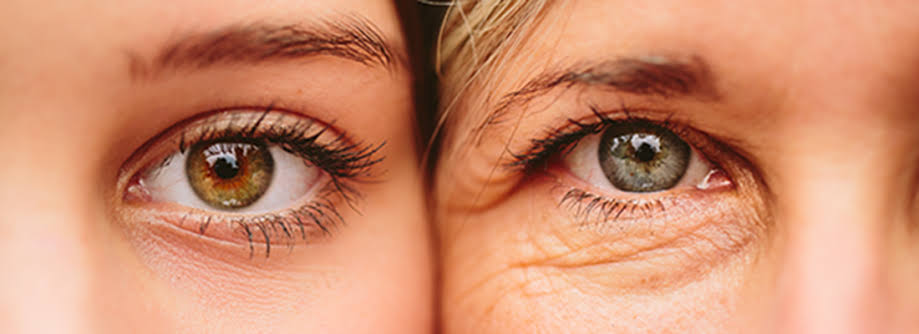
• Menopause: Increased prevalence of dry eye disease and ocular surface instability
Males :-
• Age-related testosterone decline (andropause): Leads to dry eye symptoms, tear film instability, and mild visual fluctuation
• Lifestyle-related hormonal imbalance: Stress, obesity, and poor metabolic health can indirectly affect vision
C. Hormonal Disorders Affecting Vision
• Diabetes Mellitus:
Causes fluctuating vision and risk of diabetic retinopathy
• Thyroid Disorders:
May lead to dry eye, proptosis, diplopia, and exposure-related visual issues
• PCOS (in females):
Associated with dry eye and metabolic complications affecting ocular health
D. Clinical Significance for Optometrists
Understanding hormonal influence is essential for
delivering comprehensive eye care:
• Always take a detailed systemic and hormonal history
• Avoid prescribing during periods of active visual fluctuation
• Perform thorough tear film and ocular surface evaluation
• Educate patients regarding the temporary nature of many changes
E. Conclusion
Hormonal changes have a profound and multifactorial impact on vision, affecting everything from tear film stability to retinal health. While some changes are mild and reversible, others can lead to
significant visual impairment if not properly managed. Importantly, these effects are not limited to females—males are equally affected through gradual hormonal decline and systemic conditions.