Introduction: The Joy and the Risks – Eye Safety During Celebrations
From the luminous diyas of Diwali to the midnight fireworks of New Year's Eve, festivals
and holidays represent humanitys most cherished expressions of joy, faith, and
community. Yet, as an optometrist, I witness a predictable and heartbreaking pattern
each festive season: a surge in preventable eye injuries. Ocular trauma remains a
leading cause of monocular blindness worldwide, and celebratory events are
disproportionately represented among its causes (Négrel & Thylefors, 1998). Fireworks
alone account for thousands of eye injuries annually, with a substantial proportion
resulting in permanent visual impairment (Wisse et al., 2010).
The eye is uniquely vulnerable during celebrations. It is exposed, delicate, and often
directed precisely toward the very hazards we gather to admire the burst of a rocket, the
spray of colored powder, the pop of a champagne cork.
Understanding the Hazards: Common Eye Threats During Festivals
Fireworks and pyrotechnics: Fireworks are the single most studied festival-related
ocular hazard. A systematic review of 26 studies found that fireworks-related eye
injuries frequently involve corneal abrasions, hyphema (bleeding in the anterior
chamber), globe rupture, and retinal damage, with bystanders comprising up to 47% of
victims (Wisse et al., 2010). The mechanisms are threefold: blunt concussive force from
the blast wave, penetrating trauma from high-velocity debris, and thermal or chemical
burns from incandescent material and combustion products (Kuhn et al., 2000).
Children and adolescent males are consistently overrepresented in injury series
(Canner et al., 2014).
Confetti and streamers: Though seemingly benign, paper and metallic confetti propelled
from cannons can strike the ocular surface at considerable velocity, producing corneal
abrasions and retained conjunctival foreign bodies. Corneal abrasions, while typically
self-limiting, cause significant pain and carry a risk of secondary microbial keratitis if
untreated (Wilson & Last, 2004).
Costumes and accessories: Decorative (non-prescription) cosmetic contact lenses
purchased without professional fitting are a well-documented cause of microbial
keratitis, corneal hypoxia, and abrasion — risks that peak around Halloween and
costume-centric festivals (Steinemann et al., 2005). Cosmetic glitter and craft glitter
differ materially: craft glitter has larger, sharper edges capable of lacerating the corneal
epithelium (Prokopich et al., 2014).
Food and drin: Champagne corks exit bottles at velocities sufficient to cause hyphema,
angle recession, lens dislocation, and even globe rupture; the cork's size closely
matches the orbital aperture, concentrating force directly onto the globe (Kuhn et al.,
2004). Splashes of hot oil during festive frying (common during Diwali and Hanukkah)
can cause thermal burns to the cornea and eyelids.
Environmental factors: Outdoor daytime festivals expose the eyes to ultraviolet
radiation, a known contributor to photokeratitis, pterygium, and cataract formation (Yam
& Kwok, 2014). Bonfire and firework smoke contains particulate matter that exacerbates
dry eye disease and allergic conjunctivitis (Torricelli et al., 2013).
Festival-Specific Eye Safety: A Global Perspective Indian Festivals
Diwali: The Festival of Lights produces the most concentrated spike in ocular trauma
recorded anywhere in the ophthalmic literature. Indian tertiary-care series report that
firecracker injuries during the Diwali period predominantly affect children under 15 and
young adult males, with bystanders injured nearly as often as those igniting the devices
(Kumar et al., 2010). Injuries range from superficial corneal foreign bodies to open-
globe injuries requiring enucleation. Notably, "bombs" (high-explosive crackers) and
anars (flower pots) that tip over or burst prematurely cause the most severe trauma
(Malik et al., 2013). Beyond fireworks, unattended diyas and candles present thermal
burn risks, particularly to children at eye level with tabletop flames.
Holi: The festival of colors carries a distinct chemical hazard profile. Analytical studies
have demonstrated that commercially available Holi colors are frequently industrial dyes
— malachite green, rhodamine B, auramine, and gentian violet — mixed with abrasive
particulates such as mica, silica, and even lead oxide (Velpandian et al., 2007). Clinical
series document a spectrum from acute chemical conjunctivitis and punctate epithelial
erosions to corneal ulceration, epithelial defects, and periocular allergic reactions
(Chauhan et al., 2007). High-pressure water guns (pichkaris) and water balloons add
blunt-trauma risk: balloon impacts have been associated with hyphema, angle
recession, and retinal dialysis (Jain & Gupta, 2005).
Navratri and Garba: Crowded, high-energy dance events present risks of inadvertent
contact with dandiya sticks, jewelry, and fingernails. Blunt ocular trauma from sticks can
cause hyphema and orbital contusion, while dusty outdoor venues aggravate the ocular
surface. Contact lens wearers dancing for prolonged hours in dusty environments face
elevated risk of lens-related corneal complications (Stapleton et al., 2008).
International Festivals
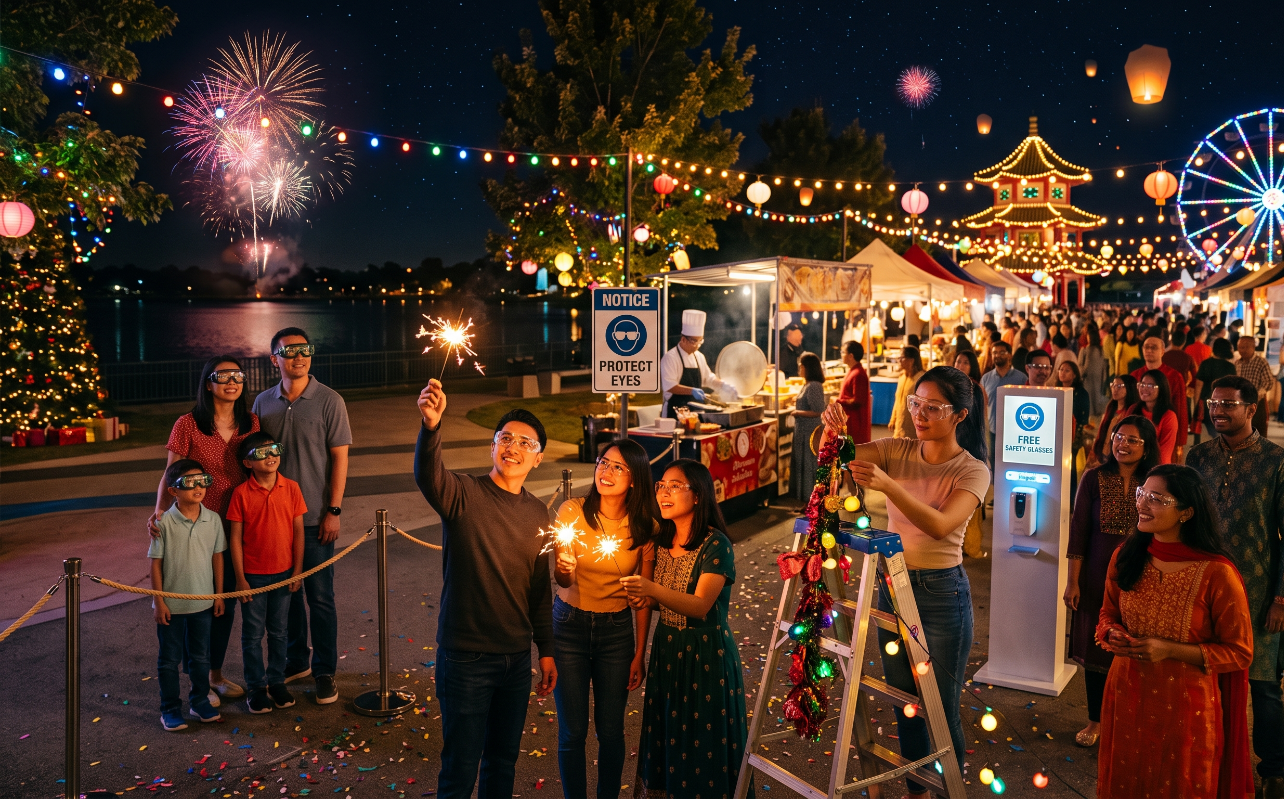
New Year’s Eve: This celebration combines three documented ocular hazards:
fireworks, champagne corks, and confetti cannons. Fireworks injuries cluster sharply
around December 31–January 1 in European trauma registries (Wisse et al., 2010).
Champagne cork injuries, though less frequent, are disproportionately severe — one
series found the majority of affected eyes sustained permanent visual deficit (Kuhn et
al., 2004).
Fourth of July (USA): United States emergency-department surveillance shows that
fireworks injuries peak dramatically in the weeks surrounding Independence Day, with
the eye among the most commonly injured body regions (Canner et al., 2014). Critically,
sparklers — often perceived as "safe" and handed to young children — burn at
approximately 1,000–1,800°F and account for a substantial share of injuries in children
under five (Moore et al., 2014).
Other celebrations: Carnival celebrations involving thrown objects, Songkran water
festival's high-pressure water play, and Chinese New Year firecracker traditions each
carry analogous blunt, chemical, or pyrotechnic risks documented in regional case
series (Arya et al., 2001).
Practical Eye Safety Tips for All Celebrations
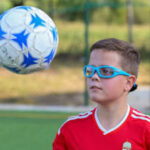
Wear protective eyewear. Polycarbonate safety glasses meeting ANSI Z87.1 (or
equivalent) standards resist high-velocity impact and should be worn by anyone igniting
fireworks — and ideally by nearby spectators, given the high proportion of bystander
injuries (Wisse et al., 2010). Ordinary spectacles and sunglasses do not provide impact
protection and can shatter, worsening injury.
Handle fireworks with strict discipline: Attend professional public displays rather than
using consumer fireworks; maintain the recommended spectator distance; never re-
approach a "dud"; never allow young children to handle sparklers; and keep a bucket of
water at hand (Canner et al., 2014). Population-level data confirm that legislation and
reduced consumer access lower injury rates (Knox et al., 2008).
Play a safer Holi: Use certified natural or herbal colors (derived from turmeric, beetroot,
or flower extracts) rather than unlabeled industrial powders (Velpandian et al., 2007).
Apply a barrier of coconut oil around the eyes, avoid throwing color directly at faces,
refuse balloon fights, and remove contact lenses before playing — lenses trap chemical
particulates against the cornea and intensify toxicity (Chauhan et al., 2007). If color
enters the eye, do not rub; irrigate immediately with copious clean water.
Be careful with glitter and costume makeup. Use only cosmetic-grade glitter, apply it
away from the lash line, and remove all eye makeup before sleeping. Never wear
decorative contact lenses obtained without a professional fitting and prescription
(Steinemann et al., 2005).
Respect the champagne cork: Chill the bottle (cold reduces internal pressure), point it
away from all faces at a 45-degree angle, and control the cork with a towel as you twist
the bottle — not the cork (Kuhn et al., 2004).
Know basic ocular first aid: For chemical exposure, irrigate immediately and
continuously with clean water or saline for at least 15–20 minutes before anything else
(Kuckelkorn et al., 2002). For a suspected penetrating injury or globe rupture, do not
rub, apply pressure, or attempt to remove any embedded object — shield the eye (a
paper cup works) and seek emergency care. For blunt trauma with pain, blurred vision,
or visible blood in the eye, treat it as an emergency.
Seek professional help promptly: Any persistent pain, light sensitivity, decreased vision,
flashes, floaters, or visible bleeding after a festive mishap warrants same-day evaluation
by an optometrist or ophthalmologist. Delayed presentation is a consistent predictor of
worse visual outcomes in ocular trauma series (Négrel & Thylefors, 1998).
Conclusion: Celebrating Safely, Seeing Clearly
The evidence is unambiguous: the overwhelming majority of festival-related eye injuries
are preventable. They follow predictable patterns — fireworks and children, adulterated
colors and unprotected eyes, corks and carelessness — and they respond predictably
to protective eyewear, safer products, sensible distance, and prompt first aid. Protecting
your vision requires no sacrifice of joy; it requires only mindfulness. This festive season,
let the only things dazzling your eyes be the lights, the colors, and the faces of the
people you love. Celebrate fully — and see clearly for a lifetime of celebrations to come.
References
Arya, S. K., Malhotra, S., Dhir, S. P., & Sood, S. (2001). Ocular fireworks injuries:
Clinical features and visual outcome. *Indian Journal of Ophthalmology, 49*(3),
189–190.
Canner, J. K., Haider, A. H., Selvarajah, S., Hui, X., Wang, H., Efron, D. T., & Schneider,
E. B. (2014). US emergency department visits for fireworks injuries, 2006–2010.
*Journal of Surgical Research, 190*(1), 305–311.
Chauhan, D., Arora, R., Das, S., Shroff, D., & Narula, R. (2007). Bilateral periorbital
necrotizing fasciitis following exposure to Holi colors: A case report. *Indian Journal of
Ophthalmology, 55*(5), 373–374.
Jain, B. K., & Gupta, R. (2005). Water balloon–related ocular trauma during festivals.
*Indian Journal of Ophthalmology, 53*(2), 143–144.
Knox, F. A., Chan, W. C., Jackson, A. J., Foot, B., Sharkey, J. A., & McGinnity, F. G.
(2008). A British Ophthalmological Surveillance Unit study on serious ocular injuries
from fireworks in the UK. *Eye, 22*(7), 944–947.
Kuckelkorn, R., Schrage, N., Keller, G., & Redbrake, C. (2002). Emergency treatment of
chemical and thermal eye burns. *Acta Ophthalmologica Scandinavica, 80*(1), 4–10.
Kuhn, F., Morris, R., Witherspoon, C. D., & Mann, L. (2004). Serious eye injuries caused
by bottles containing carbonated drinks. *British Journal of Ophthalmology, 88*(1),
69–71.
Kuhn, F., Morris, R., Witherspoon, C. D., & Mester, V. (2000). Epidemiology of blinding
trauma in the United States Eye Injury Registry. *Ophthalmic Epidemiology, 13*(3),
209–216.
Kumar, R., Puttanna, M., Sriprakash, K. S., Sujatha Rathod, B. L., & Prabhakaran, V. C.
(2010). Firecracker eye injuries during Deepavali festival: A case series. *Indian Journal
of Ophthalmology, 58*(2), 157–159.
Malik, A., Bhala, S., Arya, S. K., Sood, S., & Narang, S. (2013). Five-year study of
ocular injuries due to fireworks in India. *International Ophthalmology, 33*(4), 381–385.
Moore, J. X., McGwin, G., & Griffin, R. L. (2014). The epidemiology of firework-related
injuries in the United States: 2000–2010. *Injury, 45*(11), 1704–1709.
Négrel, A. D., & Thylefors, B. (1998). The global impact of eye injuries. *Ophthalmic
Epidemiology, 5*(3), 143–169.
Stapleton, F., Keay, L., Edwards, K., Naduvilath, T., Dart, J. K., Brian, G., & Holden, B.
A. (2008). The incidence of contact lens–related microbial keratitis in Australia.
*Ophthalmology, 115*(10), 1655–1662.
Steinemann, T. L., Fletcher, M., Bonny, A. E., Harvey, R. A., Hamlin, D., Zloty, P.,
Besson, M., Walter, K., & Gagnon, M. (2005). Over-the-counter decorative contact
lenses: Cosmetic or medical devices? A case series. *Eye & Contact Lens, 31*(5),
194–200.
Torricelli, A. A., Novaes, P., Matsuda, M., Braga, A., Saldiva, P. H., Alves, M. R., &
Monteiro, M. L. (2013). Correlation between signs and symptoms of ocular surface
dysfunction and tear osmolarity with ambient levels of air pollution in a large
metropolitan area. *Cornea, 32*(4), e11–e15.
Velpandian, T., Saha, K., Ravi, A. K., Kumari, S. S., Biswas, N. R., & Ghose, S. (2007).
Ocular hazards of the colors used during the festival-of-colors (Holi) in India—Malachite
green toxicity. *Journal of Hazardous Materials, 139*(2), 204–208.
Wilson, S. A., & Last, A. (2004). Management of corneal abrasions. *American Family
Physician, 70*(1), 123–128.
Wisse, R. P., Bijlsma, W. R., & Stilma, J. S. (2010). Ocular firework trauma: A
systematic review on incidence, severity, outcome and prevention. *British Journal of
Ophthalmology, 94*(12), 1586–1591.
Yam, J. C., & Kwok, A. K. (2014). Ultraviolet light and ocular diseases. *International
Ophthalmology, 34*(2), 383–400.