Restoring Structure. Restoring Confidence. Restoring Lives.
When a patient loses an eye, the loss extends far beyond vision. Facial harmony changes.
Confidence is shaken. Identity may feel altered. Ocular prosthetic rehabilitation is not merely
cosmetic. It restores structural balance, preserves socket health and supports psychological
recovery. At the center of this journey stands the optometrist — not as a passive observer, but
as a clinical leader ensuring safe, successful and sustainable rehabilitation.
Beyond Fabrication: The Optometrist’s Role
While ocularists craft the prosthesis, optometrists safeguard the biology, function and long-
term outcome.
1. Clinical Foundation: Pre-Prosthetic Assessment
Successful rehabilitation begins before insertion. Optometrists evaluate:
Socket integrity and volume
Conjunctival health
Inflammation or infection
Tear film stability
Eyelid position and blink mechanics
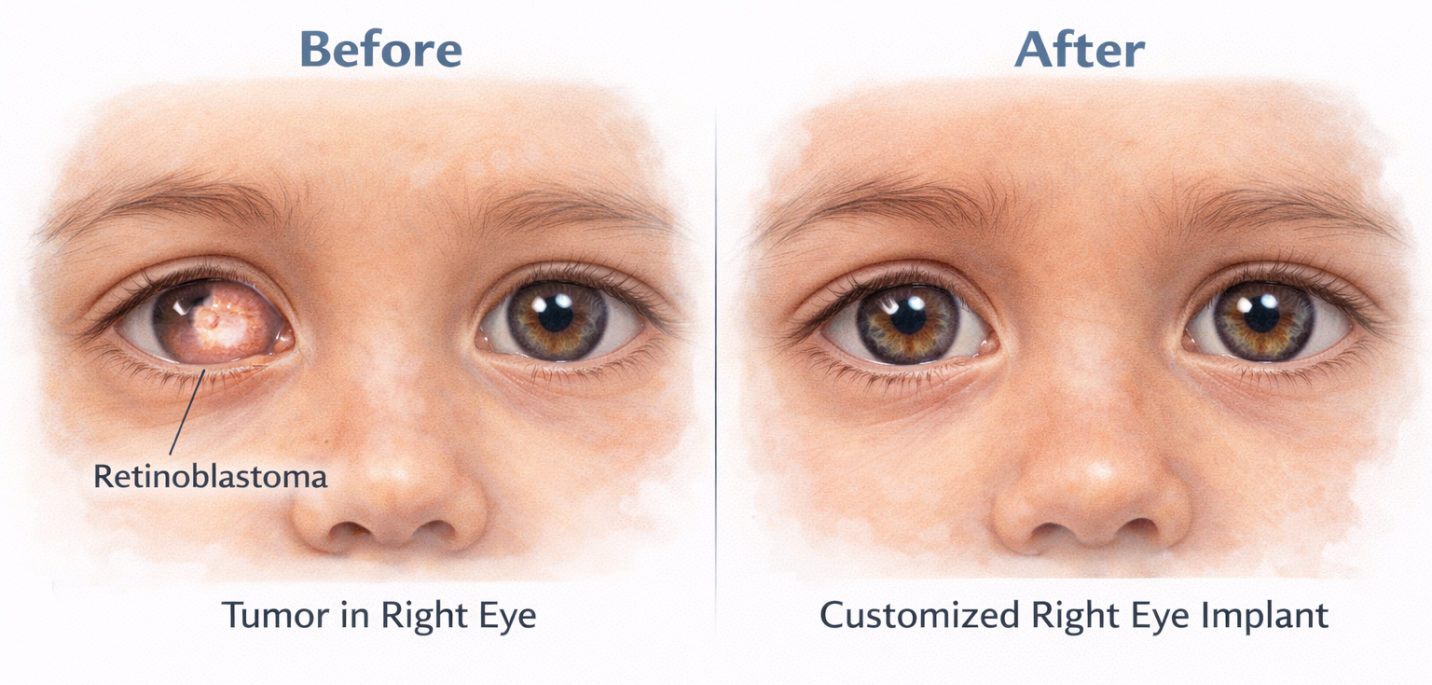
In ocular conditions such as Retinoblastoma, coordinated timing of rehabilitation is critical.A
healthy socket is not optional — it is foundational.
2. Clinical Evaluation of the Prosthesis
A well-crafted prosthesis still requires medical oversight. Optometrists assess:
Alignment and gaze symmetry
Iris centration
Socket fullness
Eyelid support
Blink comfort and tear dynamics
They detect early complications including:
Giant papillary conjunctivitis
Chronic discharge
Socket contraction
Implant exposure
Consistent follow-up converts a static device into a well-integrated rehabilitation outcome.
3. Ocular Surface Management
The anophthalmic socket is biologically active and vulnerable.Optometrists manage:
Dryness and irritation
Allergic and inflammatory reactions
Infection control
Prosthesis hygiene education
Small surface disturbances can significantly affect comfort and confidence. Early intervention
prevents chronic morbidity.
4. Pediatric Prosthetic Care
In congenital conditions such as Microphthalmia, early and continuous care shapes long-term
outcomes. Optometrists monitor:
Orbital growth
Prosthesis resizing
Tissue adaptation
Visual development of the fellow eye
In children, prosthetic rehabilitation guides craniofacial development and psychosocial growth.
5. The Psychological Dimension
Eye loss carries invisible trauma. Patients may experience anxiety, altered self-image and social
withdrawal. Optometrists often become the most consistent healthcare contact — providing
reassurance, education and timely referral when needed. Rehabilitation is incomplete without
emotional healing.
The Future of Ocular Prosthetics
Advances such as 3D-printed prostheses, digital iris replication and improved biomaterials are
redefining outcomes. Yet innovation alone is insufficient. Clinical oversight, surface
management, structured follow-up and compassionate engagement remain irreplaceable —
and that responsibility rests heavily with optometry.
Final Reflection
Ocular prosthetic rehabilitation is not about filling an empty socket. It is about restoring:
✔ Facial symmetry
✔ Biological stability
✔ Social confidence
✔ Emotional resilience
The optometrist’s role is not supportive — it is essential.