Imagine losing your vision slowly—so gradually that you don’t even notice it happening. This is the reality of glaucoma, a condition often referred to as the “silent thief of sight.” It is one of the leading causes of irreversible blindness worldwide, yet many people are unaware they have it until significant damage has already occurred.
What is Glaucoma?
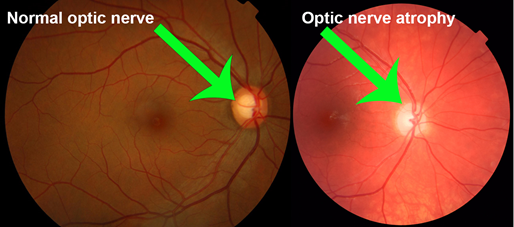
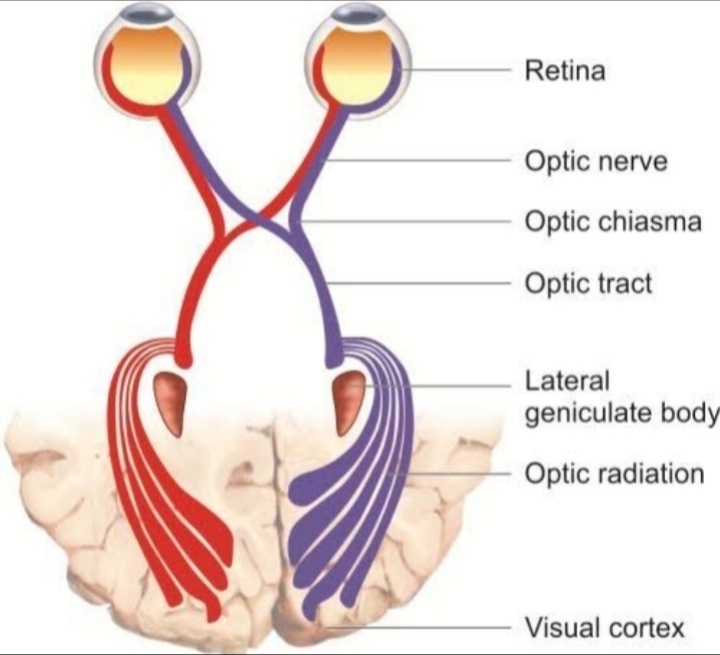
Glaucoma is not a single disease but a group of eye conditions that damage the optic nerve—the part of the eye responsible for sending visual information to the brain. When this nerve becomes damaged, vision loss begins, and if left untreated, it can eventually lead to blindness.
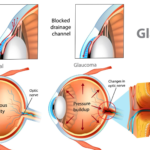
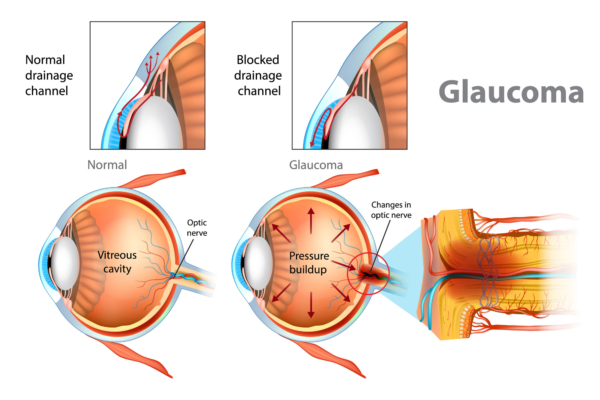
In many cases, glaucoma is linked to increased pressure inside the eye. This pressure builds up when fluid in the eye does not drain properly, gradually harming the optic nerve. However, glaucoma can still occur even when eye pressure appears normal.
Common Forms of Glaucoma
Understanding the different types of glaucoma helps explain why the disease behaves differently in different people.
1. Open-Angle Glaucoma
This is the most common type of glaucoma and develops very slowly. In this condition, the drainage angle of the eye remains open, but the fluid does not flow out efficiently. As a result, eye pressure builds up gradually.
What makes open-angle glaucoma particularly dangerous is that it has no early symptoms. Vision loss begins at the edges (peripheral vision) and progresses inward over time. Many people do not notice any problem until significant damage has occurred.
2. Closed-Angle Glaucoma (Angle-Closure Glaucoma)
This form is less common but more severe and can occur suddenly. Here, the drainage angle between the iris and cornea becomes blocked, preventing fluid from leaving the eye. This can cause a rapid rise in eye pressure and is considered a medical emergency. Symptoms may include:
Severe eye pain
Sudden blurred vision
Headache
Nausea
Seeing halos around lights
Unlike open-angle glaucoma, this type demands immediate treatment to prevent permanent vision loss.
3. Normal-Tension Glaucoma
In this form, optic nerve damage occurs even though eye pressure remains within the normal range. The exact cause is not fully understood, but it may be related to poor blood flow to the optic nerve or increased sensitivity of the nerve. Because eye pressure appears normal, this type can be harder to detect. It highlights why a full eye exam, not just pressure measurement is essential.
Why is Glaucoma called the “Silent Thief of Sight?
The nickname comes from how quietly the disease progresses. Most common forms, especially open-angle glaucoma, develop without any noticeable symptoms in the early stages.
There is no pain. No redness. No sudden loss of vision. Instead, glaucoma slowly affects peripheral (side) vision first. Because central vision remains intact for a long time, many people do not realize anything is wrong until the disease has reached an advanced stage. By then, the damage is permanent.
Symptoms
In its early stages, glaucoma often shows no warning signs at all. As the condition progresses, symptoms may include:
Gradual loss of side (peripheral) vision
Patchy blind spots
Blurred vision
Difficulty seeing in low light
In sudden or severe cases (such as closed-angle glaucoma), symptoms may include:
Severe eye pain
Headaches
Nausea
Seeing halos around lights
Who is at Risk?
While glaucoma can affect anyone, certain factors increase the risk:
Age (especially over 40)
Family history of glaucoma
High eye pressure
Medical conditions like diabetes or hypertension
Previous eye injuries
The Importance of Early Detection
Here’s the most critical fact about glaucoma: vision loss caused by it cannot be reversed. However, early detection can make all the difference. When glaucoma is identified early, treatment can slow or even stop its progression. This may include:
Prescription eye drops
Laser treatment
Surgery (in advanced cases)
The goal of treatment is not to restore lost vision but to preserve the remaining sight.
How is Glaucoma Detected?
Since early glaucoma has no symptoms, the only reliable way to detect it is through a comprehensive eye examination. This may include:
Measuring eye pressure
Examining the optic nerve
Testing peripheral vision
Regular eye exams are especially important if you have risk factors.
Prevention and Eye Health Tips
While glaucoma cannot always be prevented, you can reduce your risk and protect your vision by:
Scheduling regular eye check-ups
Knowing your family’s eye health history
Managing underlying health conditions
Protecting your eyes from injury
Final Thoughts
Glaucoma earns its title as the “silent thief of sight” because it works quietly, often unnoticed, until irreversible damage is done. But it does not have to steal your vision.
With awareness, regular eye exams, and early intervention, glaucoma can be managed effectively. Understanding its common forms; open-angle, closed-angle, and normal-tension also helps you recognize why routine screening is so important.
Your sight is priceless, protect it before it’s too late.