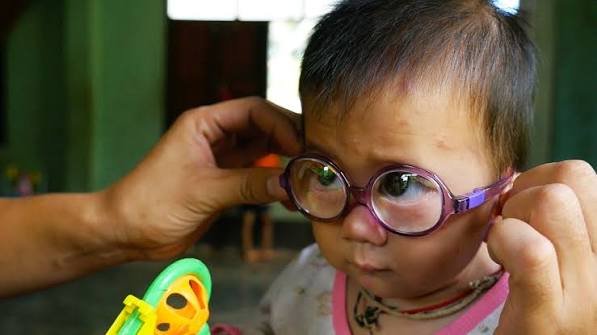
Picture a child in a classroom, struggling to read the board. It’s not a lack of effort or
intelligence—but a simple, correctable problem: they cannot see clearly. Across the globe,
millions face this reality every day, as uncorrected refractive errors silently rob them of
learning, productivity and opportunity.
The Global Burden
Refractive errors—including myopia, hyperopia and astigmatism —occur when the eye cannot
focus light accurately on the retina, resulting in blurred vision. The World Health Organization
estimates that over 2 billion people worldwide live with vision impairment, with nearly half of
these cases attributed to uncorrected refractive errors (1).
In children, uncorrected refractive error can hinder learning and cognitive development, while
adults may experience reduced work productivity and social participation. Left unaddressed,
these vision problems contribute to significant social and economic burdens globally.
Vision for All: Turning Policy into Practice in Pakistan
Global eye care strategies are only as effective as their implementation. In alignment with the
World Council of Optometry (WCO) Myopia Navigator (2), the Optometry Department at The
University of Faisalabad launched the school-based initiative “Vision for All”, reflecting the
Mitigation pillar in action.
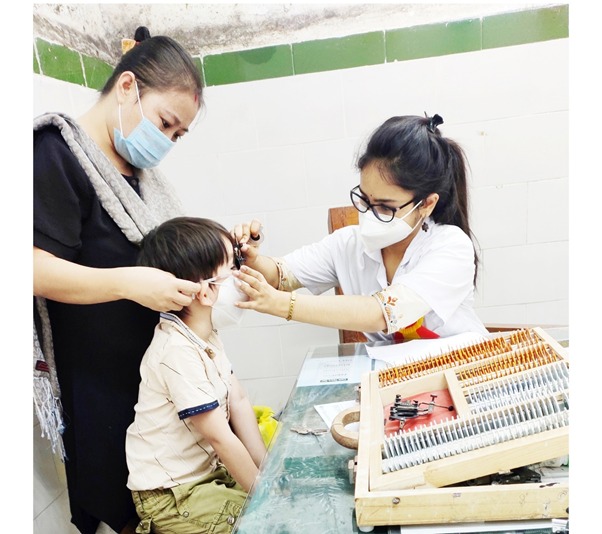
Under the supervision of Maryam Jabbar, final-year optometry students conducted vision
screenings across six schools in Faisalabad. The program aimed to:
Raise awareness among teachers and parents
Detect early signs of myopia and refractive errors
Refer at-risk children for timely intervention
The screening team—Arbab Iftikhar, Tayyaba Hameed, Juvairia Kamal, Khansa Younas, Samar
Rashid and Fatima Shahid—also collected environmental and behavioral data to explore local
risk factors influencing childhood vision. Abstract published in the 3rd International Myopia
Conference 2025 of this research work (3).
The Importance of Early Detection and Intervention
While vision can often be improved with corrective lenses, conditions like myopia are
progressive. Early detection and timely management are essential to:
Slow progression
Delay onset of complications
Reduce long-term ocular risks, including retinal detachment and glaucoma
Thus, the focus extends beyond correction to long-term visual health and risk reduction.
A Public Health Priority
Uncorrected refractive errors are not merely a clinical concern—they represent a major public
health challenge.
Children with poor vision may fall behind academically
Adults may experience reduced productivity
Societies face avoidable economic losses
A Call to Action
To effectively address this burden:
Strengthen school-based vision screening programs
Promote regular comprehensive eye examinations
Implement evidence-based myopia control strategies
Ensure affordable and accessible refractive services
Enhance community awareness and education
Clear Vision is a Right, Not a Privilege
No child should struggle to learn because they cannot see. No individual should lose
opportunities due to an uncorrected visual condition. By translating global frameworks into
sustainable local action, we can reduce avoidable vision impairment and ensure that clear
vision becomes a universal right, not a privilege.
References
1. World Health Organization. World report on vision. Geneva: WHO; 2019.
2. World Council of Optometry. Myopia Management Navigator. St. Louis: WCO; 2021.
Available from: https://myopia.worldcouncilofoptometry.info/
3. Jabbar M, Iftikhar A, Hameed T, Kamal J, Younas K, Rashid S, Shahid F. Blurring to Clarity:
School-based vision screening initiative in Pakistan. In: Abstract Book, 3rd International
Myopia Conference 2025. Available from:
https://www.researchgate.net/publication/391202068_3rd_International_Myopia_Conf
erence_2025_-_Blurring_to_Clarity