Introduction –
Blindness is one of the most life-altering conditions, especially when it is preventable.
Trachoma is one of the leading causes of avoidable blindness worldwide, particularly in
developing countries. It mainly affects people living in poor environmental and socio-
economic conditions. Although it is preventable and treatable, millions of people remain
at risk due to lack of awareness, hygiene, and healthcare access.
What is Trachoma?
Trachoma is a chronic infectious eye disease caused by the bacterium Chlamydia
trachomatis. It affects the conjunctiva, leading to inflammation and irritation. The
disease progresses slowly and can eventually result in permanent blindness if left
untreated.
Epidemiology –
Trachoma is endemic in many low-income regions of the world, particularly in parts of
Sub-Saharan Africa, South Asia, and the Middle East. According to global health
estimates, millions of people are still at risk of developing the disease. It is most
commonly found in rural areas where access to clean water and sanitation is limited.
The disease is strongly associated with poverty, making it both a medical and social
issue.
Causes of Trachoma –
The main cause of trachoma is infection with Chlamydia trachomatis. However, several
factors contribute to its spread:
– Direct contact with infected eye or nasal discharge.
– Sharing personal items like towels or cloths.
– Transmission through flies that carry the bacteria.
– Poor hygiene and lack of clean water.
– Overcrowded living conditions.
These factors are common in underdeveloped and rural communities, making trachoma
more prevalent in such areas.
Pathophysiology –
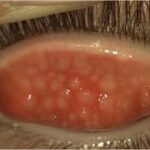
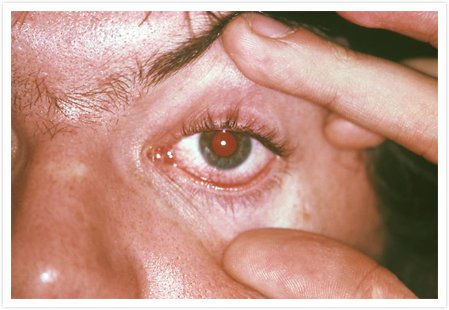
Trachoma begins with repeated bacterial infections of the conjunctiva. Each infection
triggers an inflammatory response, leading to the formation of follicles in the
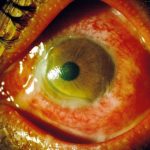
conjunctiva. Over time, chronic inflammation causes scarring of the inner eyelid. This
scarring leads to entropion, where the eyelid turns inward. As a result, the eyelashes
rub against the cornea (trichiasis), causing continuous irritation and damage. Eventually,
this leads to corneal opacity and vision loss.
Signs and Symptoms –
In the early stages, trachoma may show mild symptoms, which often go unnoticed:
– Eye redness and irritation.
– Itching and discomfort.
– Sensitivity to light.
In advanced stages, repeated infections lead to:
– Scarring of the inner eyelid.
– Inward turning of the eyelid (entropion).
– Eyelashes rubbing against the cornea (trichiasis).
– Corneal damage and eventual blindness.
Risk Factors –
Certain groups are more vulnerable to trachoma:
– Children (main carriers of infection)
– Women (due to close contact with children).
– People living in poor sanitation conditions.
– Communities with limited access to clean water.
Trachoma is strongly associated with poverty and lack of basic hygiene facilities.
Diagnosis –
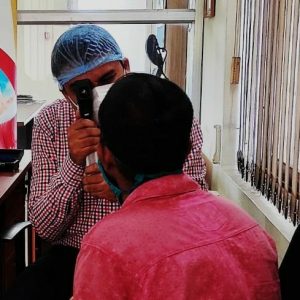
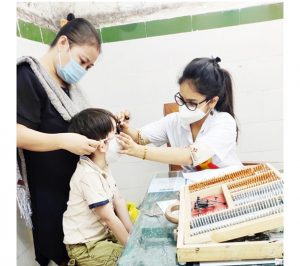
Trachoma is primarily diagnosed clinically based on characteristic signs observed
during eye examination. The World Health Organization has developed a simplified
grading system to identify different stages of the disease, such as follicular
inflammation, intense inflammation, scarring, trichiasis, and corneal opacity. In some
cases, laboratory tests may be used to confirm the presence of Chlamydia trachomatis,
but this is not always necessary in endemic areas.
Prevention of Trachoma –
Trachoma is preventable through simple but effective measures:
– Regular face washing, especially in children
– Maintaining personal hygiene
– Avoiding sharing towels or personal items
– Improving access to clean water
– Controlling fly populations
– Promoting sanitation and waste management
Community awareness plays a key role in prevention.
Treatment and Management –
The World Health Organization (WHO) recommends the SAFE strategy for controlling
trachoma:
– S – Surgery: To correct trichiasis and prevent blindness
– A – Antibiotics: Such as azithromycin to treat infection
– F – Facial cleanliness: To reduce transmission
– E – Environmental improvement: Better sanitation and water supply.
Mass antibiotic distribution programs have been very effective in reducing the disease
burden.
Role of Public Health Programs-
Public health initiatives play a crucial role in eliminating trachoma. Governments and
international organizations collaborate to implement mass drug administration
programs, improve sanitation infrastructure, and promote hygiene education. School-
based programs are particularly effective in teaching children about facial cleanliness,
which helps reduce transmission within communities.
Complications of Trachoma
If trachoma is left untreated, it can lead to serious and irreversible complications.
Continuous inflammation causes scarring of the eyelid, which eventually leads to
trichiasis. This condition is extremely painful and damages the cornea over time. In
severe cases, corneal opacity develops, resulting in permanent vision loss. These
complications not only affect vision but also reduce quality of life and productivity.
Socio-economic Impact-
Trachoma does not only affect individual health but also has a broader socio-economic
impact. People who lose their vision often become dependent on others, reducing their
ability to work and earn a living. This creates a cycle of poverty, especially in already
disadvantaged communities. Children may also drop out of school to care for affected
family members, further affecting community development.
Global Impact-
Trachoma remains a major public health issue in many developing countries,
particularly in Africa and parts of Asia. It disproportionately affects disadvantaged
communities. However, global efforts have significantly reduced its prevalence, and
many countries are moving towards elimination.
Conclusion –
Trachoma is a preventable disease that should no longer be a cause of blindness in
today’s world. Its persistence highlights the importance of improving living conditions,
hygiene, and healthcare access. With continued awareness, community efforts, and
global cooperation, eliminating trachoma is not just a goal—it is an achievable reality.