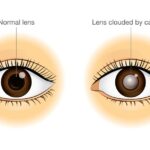
Introduction:- A Cataract is one of the most common
causes of visual impairment and blindness worldwide. It
occurs when the normally transparent crystalline lens of the
eye becomes progressively opaque, interfering with the
passage of light to the retina. While aging is the most
significant risk factor, environmental influences—especially
exposure to ultraviolet (UV) radiation—play a crucial role in
the development and progression of cataracts. With
increasing outdoor exposure due to lifestyle and occupational
demands, understanding the relationship between UV
radiation and cataract formation is essential for prevention and eye health promotion.
Understanding Ultraviolet Radiation:- Ultraviolet radiation is part of the
electromagnetic spectrum emitted by the sun. It is invisible to the human eye but has
significant biological effects. UV radiation is categorized into three types:
UVA (320–400 nm): This form penetrates deeply into tissues and contributes to long-
term damage. It can reach the lens and retina.
UVB (280–320 nm): More energetic and harmful than UVA, UVB is primarily absorbed
by the cornea and lens and is strongly associated with cataract formation.
UVC (100–280 nm): This is the most dangerous type but is almost entirely absorbed by
the ozone layer and does not typically reach the Earth's surface.
Although the atmosphere provides some protection, sufficient amounts of UVA and UVB
radiation reach the human eye to cause cumulative damage over time.
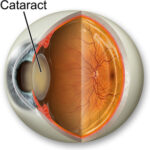
Anatomy and Function of the Lens :- The crystalline lens is a transparent, biconvex
structure located behind the iris. Its main function is to focus light rays onto the retina,
allowing clear vision. The lens is composed of highly organized proteins known as crystallins
and lacks blood vessels, relying on surrounding fluids for nourishment. Its transparency is
maintained by a delicate balance of protein structure, hydration, and antioxidant systems.
Any disruption in this balance—such as that caused by UV radiation—can lead to structural
and biochemical changes, resulting in lens opacity.
Mechanisms of UV-Induced Cataract Formation :-
UV radiation contributes to cataract formation through multiple interrelated mechanisms:
1. Oxidative Stress
One of the primary mechanisms is Oxidative Stress. UV exposure generates reactive oxygen species
(ROS), commonly known as free radicals, within the lens. These molecules damage cellular
components, including proteins, lipids, and DNA. Since the lens has limited regenerative capacity,
accumulated oxidative damage leads to progressive clouding.
2. Protein Denaturation and Aggregation
The transparency of the lens depends on the precise arrangement of crystallin proteins. UV radiation
alters their structure, causing denaturation and aggregation. These clumped proteins scatter light
instead of transmitting it, resulting in the characteristic opacity of cataracts.
3. Damage to Lens Epithelial Cells
The lens epithelium plays a critical role in maintaining lens metabolism and homeostasis. UV radiation
can damage the DNA of these cells, impairing their ability to repair and regenerate. This contributes to
long-term deterioration of lens clarity.
4. Depletion of Antioxidants
The lens contains natural antioxidants such as glutathione, vitamin C, and vitamin E, which protect
against oxidative damage. Prolonged UV exposure depletes these protective substances, making the
lens more vulnerable to injury.
5. Cumulative and Dose-Dependent Effect
Unlike acute injuries, UV-induced cataract formation is a gradual process. The risk increases with cumulative
lifetime exposure, meaning that even moderate exposure over many years can significantly elevate the
likelihood of developing cataracts.
Types of Cataracts Associated with UV Exposure
Cataracts are classified based on their location within the lens:
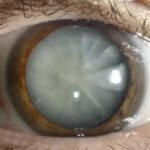
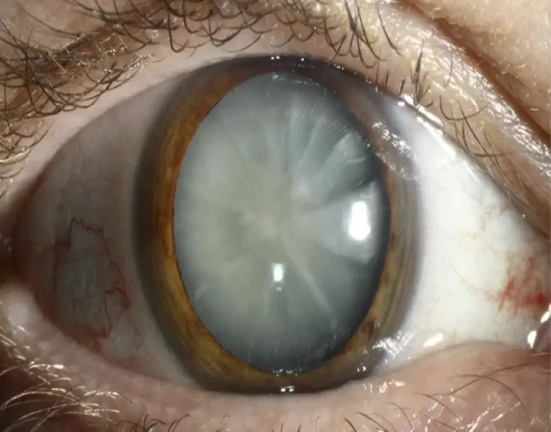
Cortical Cataract:
This type affects the outer layer (cortex) of the lens and is strongly associated with UVB
exposure. It appears as wedge-shaped or spoke-like opacities extending from the periphery
toward the center.
Nuclear Cataract:
Occurring in the central nucleus, this type is primarily age-related but is also influenced by
oxidative stress caused by UV radiation.
Posterior Subcapsular Cataract (PSC):
Located at the back of the lens, PSC is linked to factors such as steroid use, diabetes, and
possibly UV exposure. It tends to affect vision more rapidly than other types.
Among these, cortical cataracts show the strongest correlation with prolonged UV exposure.
Risk Factors for UV-Induced Cataract
Several factors influence an individual’s susceptibility:
Geographical Location: People living in tropical or high-altitude regions are exposed to higher
levels of UV radiation.
Occupational Exposure: Outdoor workers such as farmers, fishermen, and construction
workers are at increased risk.
Lack of Eye Protection: Not wearing UV-blocking sunglasses significantly increases exposure.
Age: Aging reduces the eye’s natural defense mechanisms.
Lifestyle Factors: Smoking and alcohol consumption enhance oxidative stress.
Nutritional Deficiency: Diets low in antioxidants increase vulnerability.
Medical Conditions: Diseases like diabetes can accelerate cataract formation.
Symptoms of Cataract
The symptoms of cataract typically develop slowly and may include:
Blurred or cloudy vision
Increased sensitivity to light (photophobia)
Glare and halos around lights
Difficulty seeing at night
Fading or yellowing of colors
Frequent changes in eyeglass prescription
Double vision in one eye (monocular diplopia)
Prevention and Protective Measures
Preventing UV-induced cataracts involves minimizing exposure and enhancing eye protection:
1. UV-Protective Eyewear
Wearing sunglasses that block 100% of UVA and UVB rays (labeled UV400) is the most effective
preventive measure. Wraparound designs offer additional protection by limiting peripheral exposure.
2. Use of Hats
Wide-brimmed hats or caps reduce direct UV exposure to the eyes by blocking sunlight from above
and the sides.
3. Avoiding Peak Sun Hours
Limiting outdoor activities during peak UV radiation hours (10 AM to 4 PM) can reduce risk.
4. Nutritional Support
A diet rich in antioxidants—such as green leafy vegetables, citrus fruits, nuts, and fish—helps protect
the lens from oxidative damage.
5. Regular Eye Examinations
Routine eye check-ups enable early detection and timely management of cataracts and other ocular
conditions.
Treatment of Cataract
Once cataracts significantly impair vision, the only effective treatment is surgical removal of the
cloudy lens. Cataract surgery involves replacing the natural lens with an artificial intraocular lens
(IOL). It is one of the most commonly performed and successful surgical procedures worldwide, with
high rates of visual recovery.