Visual impairment is a broad term that includes varying degrees of vision loss. Two commonly misunderstood conditions under this umbrella are low vision and blindness. Although they are often used interchangeably in everyday language, clinically they represent very different levels of visual function, prognosis, and management.
What is Low Vision?
Low vision refers to a significant reduction in visual function that cannot be fully corrected with standard spectacles, contact lenses, medication, or surgery, but where useful vision is still present.
According to the World Health Organization (WHO):
• Visual acuity less than 6/18 but equal to or better than 3/60 in the better eye with best possible correction
• A visual field of less than 20 degrees, but with remaining functional vision.
Key Characteristics
• Patients can perceive light, shapes, movement, or large objects
• Difficulty with daily activities such as reading, recognizing faces, or mobility
• Vision may fluctuate or progressively deteriorate depending on the cause
Common Causes
• Age-related macular degeneration (ARMD)
• Diabetic retinopathy
• Glaucoma
• Retinitis pigmentosa
• Optic nerve disorders
• High myopia with degenerative changes
Management Approach
Low vision is manageable and rehabilitative:
• Low vision aids (magnifiers, telescopes, electronic devices)
• Contrast enhancement and lighting modification
• Vision rehabilitation training
• Orientation and mobility training
• Counseling and adaptive strategies
The goal is to maximize remaining vision and improve quality of life.
What is Blindness?
Blindness represents a more severe form of visual impairment where functional vision is absent or nearly absent, even after best possible correction.
WHO defines blindness as:
• Visual acuity less than 3/60 in the better eye with best correction
Or
• Visual field less than 10 degrees around central fixation
Key Characteristics
• Minimal or no perception of form
• May have only light perception or no light perception
• Visual information is insufficient for independent visual tasks
Common Causes
• Advanced glaucoma
• End-stage retinitis pigmentosa
• Severe optic atrophy
• Advanced diabetic eye disease
• Congenital anomalies
• Trauma or infections causing irreversible damage
Management Approach
Blindness focuses on non-visual rehabilitation:
• Braille education
• Screen readers and assistive technology
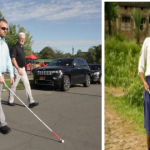
• Orientation and mobility training using cane or guide support
• Vocational rehabilitation
• Psychological support
The emphasis shifts from vision restoration to functional independence and social
integration.
Importance of Early Diagnosis
Early identification of low vision can prevent progression to blindness in many cases
through timely treatment, monitoring, and rehabilitation. Regular eye examinations,
patient education, and awareness are essential in reducing avoidable visual disability.
Conclusion
While both low vision and blindness fall under visual impairment, they are clinically distinct conditions with different diagnostic criteria, management strategies, and rehabilitation goals.
Recognizing this difference allows eye care professionals to provide targeted interventions and helps patients receive appropriate support. With proper care and rehabilitation, individuals with low vision or blindness can lead independent and fulfilling lives.