Vision drives athletic performance. Tracking a fastball, reading a defender's hips, or judging the break of
a putt all depend on clear, stable sight. For many athletes, contact lenses offer clinical advantages that
glasses cannot match.
Frames restrict side vision and can distort the lens edges. Contacts move with the eye,
preserving a natural field, which matters in basketball, soccer and hockey, where awareness of
teammates and opponents is essential.
Glasses fog, slip with sweat and can break on impact. Contacts stay put, resist
fogging and remove the risk of frame fragments near the eye in collision sports.
With higher prescriptions, glasses magnify or minimize the image and shift with head
movement. Contacts keep the optical center aligned with the pupil, so vision stays more consistent from
moment to moment.

Orthokeratology deserves special mention. These rigid lenses temporarily flatten the central cornea
overnight, giving clear daytime vision with no eyewear. It requires careful fitting and disciplined hygiene.
• Ball sports (baseball, tennis, cricket): stable toric designs and, for some, contrast-enhancing
tints support tracking small, fast objects.
• Swimming and water sports: Ortho-K or prescription goggles avoid water contact with soft
lenses.
• Combat and contact sports: daily disposables plus certified protective eyewear; lenses do not
protect against impact.
• Endurance and outdoor sports (running, cycling, skiing): UV-blocking lenses, lubricating drops
and wraparound eyewear against wind and dust.
• Golf and shooting: multifocal options can help with mid-range depth and target clarity.
Some lenses are tinted to reduce glare or boost contrast against a specific background. Amber and
yellow tints may help against sky or grass, while gray reduces brightness without shifting color. Research
is mixed and effects vary by sport, lighting and individual, so treat tints as something to trial rather than
a guaranteed edge. UV-blocking materials add protection for outdoor athletes.
Studies of athletes generally find that well-fitted contacts provide vision at least as good as glasses, with
advantages in field of view and freedom from fogging or slipping. Reports of performance gains from
tinted or enhancement lenses are smaller and less consistent, and are often based on small samples.
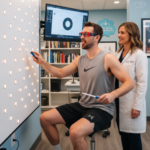
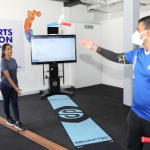
Sports vision training, such as eye-tracking and reaction drills, may complement correction, but results
differ between studies and sports. Athletes should view lenses as removing a visual limitation, not
adding a superpower.
A sports-focused exam goes beyond a standard prescription. Clinicians look at the following:
• Sport and environment: indoor or outdoor, dust, water, altitude and wind
• Tear film: exertion and airflow can accelerate evaporation
• Fit under motion: lens movement and centration during dynamic activity
• Binocular vision and depth perception: areas where vision training can add value
Exertion, airflow and reduced blinking during intense focus can dry the eye and blur vision late in a
session. Newer lens materials, daily disposables and rewetting drops help, and a clinician can identify
underlying dry eye. Young athletes deserve attention too: children who are ready to handle lenses
responsibly can benefit from them, and some specialty designs are also used to slow myopia
progression, an added advantage for growing players.
1. Wash and dry hands before handling lenses.
2. Avoid swimming or showering in lenses unless your eye doctor directs otherwise; water
exposure is linked to serious infections such as Acanthamoeba keratitis.
3. Carry a spare pair and approved rewetting drops.
4. Remove lenses at the first sign of redness, pain or blurred vision and seek prompt care.
5. Follow the replacement schedule strictly.
The Bottom Line
Contact lenses can improve field of view, stability and visual consistency for athletes, but the right
choice depends on the sport, prescription and individual eye. Evidence for enhanced performance
beyond simply correcting vision remains limited, so the goal is dependable, comfortable sight rather
than a promised edge. A tailored fitting from an optometrist or ophthalmologist familiar with sports
vision turns a good lens into a genuine competitive tool.