
Introduction:-
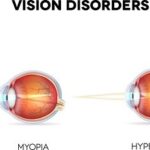
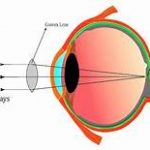
Myopia, also known as short-sightedness, is a common refractive error in which a person can see nearby objects clearly but distant objects appear blurred. It occurs when the eye is too long relative to its optical power, or when the cornea/lens has too much focusing power. As a result, light from distant objects is focused in front of the retina rather than directly on it.
Causes of Myopia
Myopia is usually caused by a combination of genetic and environmental factors, including:
Near Work:-
Near work refers to visually demanding activities performed at a relatively short distance from the eyes. Traditionally, reading and writing were the major forms of near work. Today, children’s and young adults’ near-work activities increasingly include digital devices. examples of near work –
Near work generally requires accommodation, convergence, and increased visual attention. When an individual performs prolonged near tasks, the eyes must continuously adjust to maintain a clear image.
Near Work and Myopia
Near work and myopia has been investigated extensively. Several studies have reported that children who spend greater amounts of time performing near-work activities may have a higher risk of developing myopia or progressing toward higher myopia.However, near work should not be considered the sole cause of myopia. Myopia is multifactorial, involving a combination of genetic predisposition, visual environment, education, lifestyle, and other factors. Continuous near work for long periods, particularly at very short viewing distances, may place greater demands on the visual system than shorter periods interrupted by breaks.
Mechanisms of near work
1.
-
Accommodative Demand
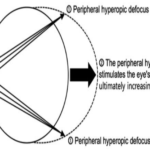
:-When viewing a close object, the eye must accommodate to maintain a clear retinal image. Prolonged accommodation may be associated with accommodative changes or accommodative lag. An accommodative lag means that the eye does not accommodate sufficiently for the required near distance. This may result in a relatively hyperopic retinal image during near work. Researchers have proposed that such retinal signals could influence ocular growth in susceptible individuals.
2.
-
Retinal Defocus
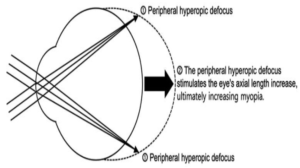
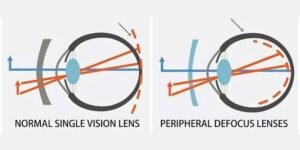
:- The retina plays an important role in regulating eye growth. During prolonged near work, changes in accommodation and the visual environment may produce patterns of retinal defocus. Some theories suggest that sustained exposure to certain forms of defocus may provide signals that encourage axial elongation of the eye. Increased axial length is one of the major structural characteristics associated with myopia.
3.
-
Working Distance
;-The distance at which near work is performed may also be important. A shorter working distance increases accommodative and convergence demands.For example, reading or using a smartphone very close to the face requires greater accommodation than viewing the same material at a more comfortable distance. Habitually maintaining a very short working distance has therefore been considered a potential risk factor for myopia.
4.
-
Continuous Near Work
:-The duration of uninterrupted near work may also influence visual stress. Spending several hours continuously reading or using a digital device provides fewer opportunities for the visual system to relax and change its focusing demand.This is why regular breaks during prolonged near activities are commonly recommended.
Near Work and Digital Device
The widespread use of smartphones, tablets, and computers has increased the amount of near visual activity among children and young adults. Smartphones are particularly important because they are frequently held closer to the eyes than books or desktop computer screens. Digital devices themselves should not automatically be considered the direct cause of myopia. Rather, excessive screen use may contribute indirectly by increasing the amount of near work and, in some cases, reducing time spent outdoors. Children may spend long periods using smartphones for education, entertainment, gaming, and social communication. This can result in extended periods of close viewing with relatively few breaks.
Importance of Outdoor activity
One of the strongest environmental factors associated with myopia development is time spent outdoors. Studies have consistently suggested that children who spend more time outdoors have a lower risk of developing myopia.The protective effect of outdoor activity may be related to exposure to bright outdoor light. Dopamine released in the retina has been proposed as one mechanism through which outdoor light may influence ocular growth. Importantly, outdoor time may be beneficial even when children continue to perform normal amounts of near work. Therefore, managing myopia risk is not simply about eliminating reading or studying. Instead, a balanced visual lifestyle is important.
Near Work, Education, and Myopia
Education and intensive academic activity have frequently been associated with higher rates of myopia. Children who spend substantial amounts of time studying may also spend less time outdoors.This creates difficulty in determining whether myopia is caused directly by near work, indirectly by reduced outdoor exposure, or by an interaction between the two.Academic achievement itself does not cause myopia. Reading and learning are essential activities. The goal should therefore be to encourage healthy visual habits rather than discourage children from studying.
Prevention and Healthy Near-Work Habits
Although near work cannot always be avoided, several practical measures can help create a healthier visual environment.
1. Maintain an Appropriate Working Distance
Reading material and digital devices should be kept at a comfortable distance rather than extremely close to the face. Avoiding very short working distances can reduce accommodative demand.
2. Take Regular Breaks
During prolonged near work, regular breaks should be encouraged. The commonly used 20-20-20 approach suggests looking at something approximately 20 feet away for 20 seconds after every 20 minutes of near work. Although this is primarily used to reduce digital eye strain, regular distance viewing also provides a useful interruption to continuous near activity.
3. Increase Outdoor Activity
Children should be encouraged to spend adequate time outdoors every day. Outdoor activity is one of the most important lifestyle measures associated with reducing the risk of myopia onset.
4. Maintain Good Lighting
Reading and studying should be performed under adequate, comfortable illumination. Poor lighting can increase visual discomfort and may encourage children to hold reading material closer.
5. Limit Unnecessary Screen Time
Screen use should be balanced with outdoor activities, physical activity, sleep, and other non-screen activities. Particularly long periods of recreational smartphone use should be avoided when possible.
6. Encourage Good Posture
Maintaining appropriate posture helps prevent excessive shortening of the working distance. Children should avoid lying down or bending extremely close to books or screens for prolonged periods.
Conclusion
Myopia is a complex condition influenced by both genetic and environmental factors. Near work has been associated with myopia, particularly when it involves prolonged, intensive, or very close visual activity. Possible mechanisms include sustained accommodative demand, accommodative lag, retinal defocus, and effects on ocular growth. However, near work is not the only factor responsible for myopia. Outdoor exposure appears to have an important protective role, and the modern increase in digital device use has made healthy visual habits increasingly relevant. Maintaining a comfortable working distance, taking regular breaks, reducing unnecessary prolonged screen use, and spending sufficient time outdoors can contribute to healthier visual habits. Early eye examinations and appropriate myopia-management strategies are also essential for children at risk of myopia progression.