Introduction
Binocular vision is the foundation of comfortable, efficient, and coordinated visual function. In routine refraction, achieving equal clarity in both eyes is not enough—both eyes must work together in balance. This is where binocular balancing plays a crucial role. Binocular balancing techniques are used during subjective refraction to ensure that accommodation is equally stimulated in both eyes, preventing over-minus or under-minus correction in either eye. Proper binocular balance helps deliver accurate prescriptions and improves patient comfort, visual clarity, and long-term visual performance.
What is Binocular Balancing?
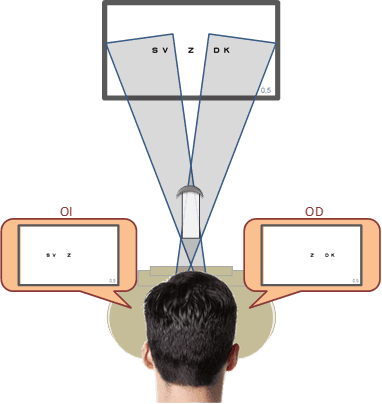
Binocular balancing is the process of adjusting the refractive correction so that both eyes have equal accommodative demand while viewing simultaneously.
The primary goal is to:
Prevent one eye from dominating accommodation
Avoid over-accommodation or under-accommodation
Achieve balanced visual input from both eyes
This technique is usually performed after monocular subjective refraction, once maximum plus (or minimum minus) has been established for each eye.
Why is Binocular Balancing Necessary?
When refraction is done monocularly, accommodation is partially relaxed due to occlusion. However, under binocular viewing conditions, accommodation may change. Without binocular balancing:
One eye may be over-minused
The patient may experience eye strain or headaches
Symptoms like blur, fatigue, or diplopia may persist
Binocular vision disorders may worsen
Binocular balancing ensures the prescription works in real-life binocular conditions, not just during testing.
Prerequisites for Binocular Balancing
Binocular balancing should be performed only when:
Best monocular subjective refraction is completed
Visual acuity is approximately equal in both eyes
No significant strabismus or suppression is present
Patient has normal or near-normal binocular vision
⚠️ It is not recommended in cases of:
Amblyopia
Constant strabismus
Large anisometropia
Suppression
Common Binocular Balancing Techniques
1. Alternate Occlusion (Prism Dissociation) Method Principle:
Both eyes view the same target alternately, preventing either eye from accommodating independently.
Procedure:
Place a prism (usually 3–6∆ base up or base down) before one eye
The patient sees two images of the same chart
Ask the patient to compare clarity of both images
Adjust plus/minus lenses until both images appear equally clear
Advantages:
Simple and commonly used
Maintains binocular viewing
Effective for cooperative patients
Limitations:
Requires good patient understanding
Less effective in poor binocular vision
2. Dissociated Prism Binocular Balance (Von Graefe Technique)
Principle:
Uses vertical prisms to dissociate images, forcing each eye to see a separate image.
Procedure:
Place 6∆ base up prism before one eye and 3∆ base down before the other
Ask which image appears clearer
Adjust sphere power until both images are equally clear
Advantages:
Widely accepted clinical method
Effective in phoropter refraction
Limitations:
Can be confusing for some patients
Requires careful instruction
3. Humphriss Immediate Contrast Technique (HICT)
Principle:
Balances accommodation by creating unequal contrast between the two eyes.
Procedure:
Both eyes view the chart simultaneously
One eye is fogged slightly with +0.75 D
The unfogged eye views clearer letters
Gradually reduce fog until clarity equalizes
Advantages:
Quick and efficient
Maintains fusion
Less confusing for patients
Limitations:
Requires accurate initial refraction
Less precise in high refractive errors
4. Turville Infinity Balance Technique
Principle:
Balances eyes under relaxed accommodation by using fogging.
Procedure:
Add plus lenses binocularly
Gradually reduce plus while patient reads letters
Ensure equal clarity in both eyes before final prescription
Advantages:
Useful for young patients
Reduces risk of over-minus
Limitations:
Time-consuming
Less commonly used in busy clinics
Clinical Importance of Binocular Balancing
1. Prevents Over-Minus Prescription
Over-minus lenses can lead to excessive accommodation, causing headaches and eye strain.
Binocular balancing helps avoid this common error.
2. Improves Visual Comfort
Balanced accommodation reduces symptoms like:
Asthenopia
Blurred vision
Fatigue during near work
3. Enhances Binocular Vision
Proper balance supports:
Better fusion
Improved stereopsis
Stable binocular coordination
4. Essential in Myopia Management
In children and young adults, over-minus prescriptions can accelerate myopia progression.
Binocular balancing ensures safe and accurate correction.
5. Improves Patient Satisfaction
Patients experience clearer, more comfortable vision in real-world conditions, increasing trust
and compliance.
Role of Binocular Balancing in Modern Optometry
With increasing digital device use and rising cases of accommodative and binocular vision
disorders, binocular balancing has become more relevant than ever. It is a clinical skill that
reflects precision and professionalism in optometric practice.
Optometrists who consistently perform binocular balancing demonstrate:
Better refractive accuracy
Strong clinical judgment
Commitment to patient-centered care
Conclusion
Binocular balancing is not an optional step—it is an essential component of accurate
subjective refraction. By ensuring equal accommodative demand and binocular harmony, it
enhances visual comfort, prevents refractive errors, and supports long-term ocular health.
Mastering binocular balancing techniques empowers optometrists to deliver prescriptions that
work not just on the chart, but in everyday life. In a world where visual demands are
increasing rapidly, balanced vision is the key to comfortable seeing.